


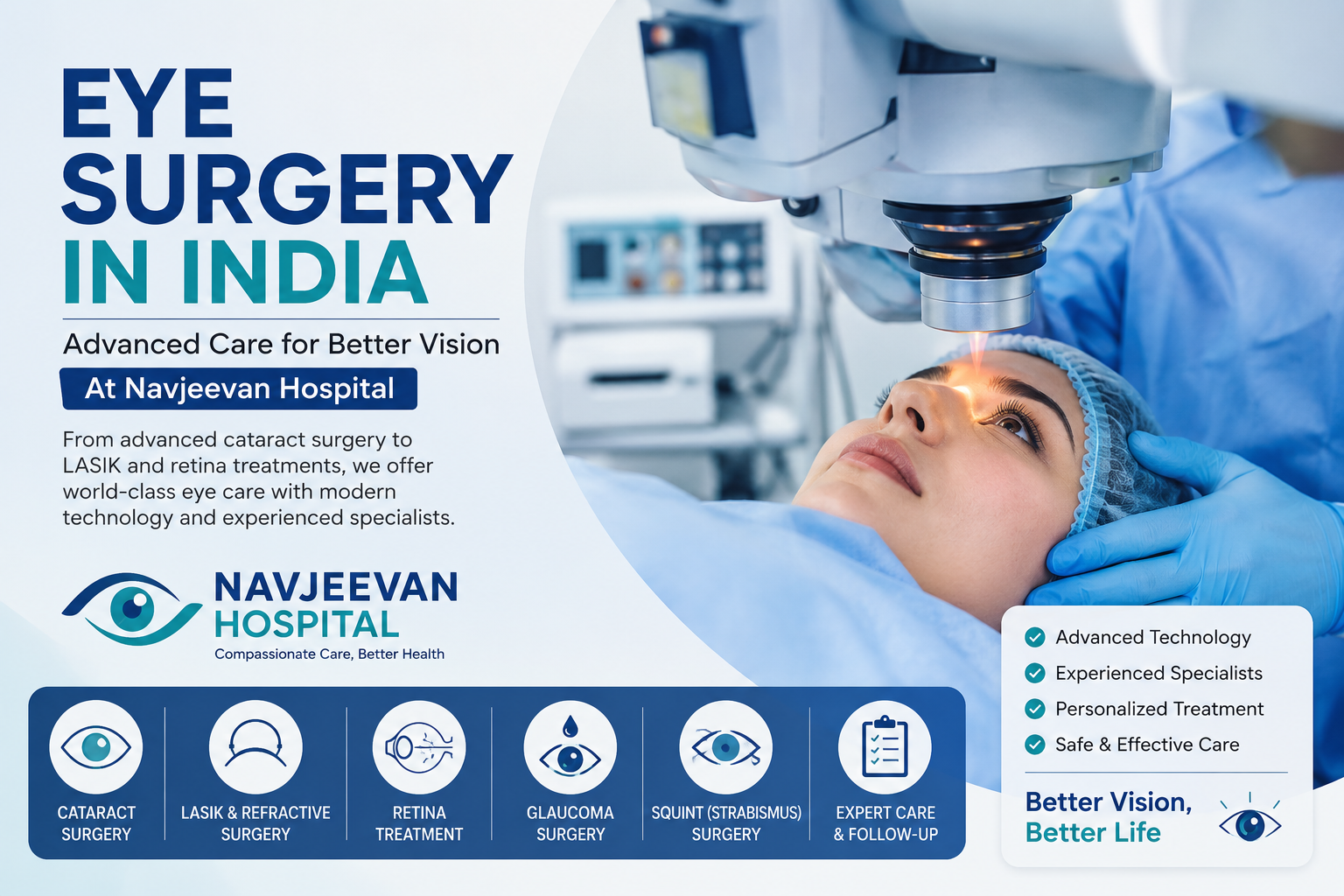
Our eyes help us experience the world around us, making vision one of the most important senses for daily life. Whether it is reading, driving, working, studying, or spending time with family, healthy vision plays a crucial role in maintaining independence and quality of life. Unfortunately, millions of people suffer from eye conditions that can affect their eyesight and overall well-being.
The good news is that advances in ophthalmology have made eye surgery in India safer, more effective, and more accessible than ever before. Modern surgical techniques can help correct vision problems, treat eye diseases, and restore clear sight for patients of different age groups.
At Navjeevan Hospital, we believe that awareness and timely treatment are the keys to protecting vision. Understanding the available eye surgery options can help patients make informed decisions about their eye health and seek treatment before complications arise.
What Is Eye Surgery?
Eye surgery refers to any surgical procedure performed on the eye or surrounding structures to improve vision, treat eye diseases, or prevent further vision loss. Modern ophthalmic surgery utilizes advanced technology, specialized instruments, and minimally invasive techniques to deliver excellent outcomes with faster recovery times.
Eye surgeries may be recommended for conditions such as:
- Cataracts
- Refractive errors
- Glaucoma
- Retinal diseases
- Corneal disorders
- Squint (Strabismus)
- Eye injuries
- Age-related eye conditions
The type of surgery required depends on the patient’s diagnosis, age, eye condition, and visual needs.
Why Is Eye Surgery Becoming More Popular in India?
India has emerged as a leading destination for advanced eye care due to several factors:
Advanced Technology
Modern hospitals now use sophisticated diagnostic equipment and surgical systems that improve precision and patient safety.
Experienced Specialists
India has highly trained ophthalmologists and eye surgeons who specialize in different areas of eye care, including retina, cornea, glaucoma, and refractive surgery.
Improved Patient Outcomes
Modern techniques have significantly reduced recovery time and increased surgical success rates.
Greater Awareness
More people are seeking regular eye examinations and timely treatment, leading to earlier diagnosis and better outcomes.
Common Eye Conditions That May Require Surgery
Cataracts
Cataracts are one of the most common causes of vision impairment, especially among older adults. They occur when the eye’s natural lens becomes cloudy, making vision blurry and affecting daily activities.
Common Symptoms of Cataracts
- Blurred vision
- Difficulty reading
- Sensitivity to bright lights
- Poor night vision
- Frequent changes in glasses prescription
- Faded color perception
If left untreated, cataracts can significantly reduce vision quality and impact independence.
Glaucoma
Glaucoma is often called the “silent thief of sight” because it can damage the optic nerve without causing noticeable symptoms in its early stages.
Common Risk Factors
- Age above 40 years
- Family history of glaucoma
- Diabetes
- High eye pressure
- Previous eye injuries
In some cases, surgery may be necessary to reduce eye pressure and prevent further vision loss.
Retinal Disorders
The retina is responsible for capturing light and sending visual information to the brain. Retinal diseases can seriously affect vision if not treated promptly.
Common retinal conditions include:
- Diabetic Retinopathy
- Retinal Detachment
- Macular Hole
- Epiretinal Membrane
- Age-Related Macular Degeneration (ARMD)
Timely intervention is essential to preserve eyesight and prevent permanent vision loss.
Refractive Errors
Many people depend on glasses or contact lenses due to:
- Nearsightedness (Myopia)
- Farsightedness (Hyperopia)
- Astigmatism
Advanced refractive surgeries such as LASIK can help reduce dependence on corrective eyewear.
Squint (Strabismus)
Squint occurs when the eyes are not properly aligned. It may affect both children and adults.
Benefits of squint surgery may include:
- Improved eye alignment
- Better binocular vision
- Enhanced appearance
- Improved confidence
Types of Eye Surgery Available in India
Cataract Surgery
Cataract surgery is one of the safest and most successful surgical procedures performed today.
During the procedure:
- The cloudy lens is removed.
- An artificial intraocular lens (IOL) is implanted.
- Vision gradually improves as the eye heals.
Modern cataract surgery often involves smaller incisions, increased precision, and faster recovery.
LASIK Surgery
LASIK is one of the most popular vision correction procedures worldwide.
It helps correct:
- Myopia
- Hyperopia
- Astigmatism
Benefits of LASIK include:
- Reduced dependence on glasses
- Quick recovery
- Improved quality of life
- Long-lasting results
Retina Surgery
Retina surgery may be recommended for conditions such as retinal detachment, macular holes, and diabetic retinal complications.
Early treatment is important because delayed intervention may result in irreversible vision loss.
Glaucoma Surgery
When medications and laser treatments are insufficient, glaucoma surgery may be required to control eye pressure and protect the optic nerve.
The primary goal is to preserve existing vision and prevent further deterioration.
Corneal Surgery
The cornea is the transparent front part of the eye responsible for focusing light.
Corneal surgery may be required for:
- Corneal infections
- Corneal scars
- Keratoconus
- Corneal degeneration
In some cases, corneal transplantation may be necessary.
Squint Surgery
Squint surgery involves adjusting the eye muscles to improve alignment and coordination between the eyes.
The procedure is commonly performed in both children and adults.
Signs You Should Not Ignore
Many eye diseases develop gradually and may not cause pain. Consult an eye specialist if you experience:
- Blurry vision
- Double vision
- Sudden vision loss
- Flashes of light
- Floating spots
- Distorted vision
- Eye pain
- Persistent redness
- Difficulty seeing at night
- Frequent headaches due to vision problems
Early evaluation can help prevent complications and improve treatment outcomes.
Benefits of Modern Eye Surgery
Modern ophthalmology has transformed the patient experience.
Improved Precision
Advanced technology allows surgeons to perform procedures with greater accuracy.
Faster Recovery
Many patients resume normal activities much sooner than with traditional methods.
Enhanced Safety
Improved surgical techniques reduce risks and complications.
Better Visual Outcomes
Patients often experience significant improvements in vision and quality of life.
Minimally Invasive Procedures
Smaller incisions mean less discomfort and quicker healing.
How to Prepare for Eye Surgery
Proper preparation can help ensure a smooth surgical experience.
Before Surgery
Your ophthalmologist may recommend:
- Comprehensive eye examination
- Medical history review
- Diagnostic tests
- Medication adjustments if necessary
Questions to Ask Your Doctor
- What type of surgery is recommended?
- What results can I expect?
- How long is recovery?
- What precautions should I take?
- What are the potential risks and benefits?
Understanding the procedure helps patients feel more confident and informed.
Recovery After Eye Surgery
Recovery varies depending on the procedure performed.
General recovery guidelines include:
- Follow prescribed medications
- Avoid rubbing your eyes
- Attend follow-up appointments
- Wear protective eyewear if advised
- Avoid strenuous activities during the initial recovery period
Most patients notice gradual improvement in vision as healing progresses.
Importance of Regular Eye Checkups
One of the most effective ways to prevent vision loss is through routine eye examinations.
Regular checkups can help detect:
- Cataracts
- Glaucoma
- Diabetic eye disease
- Retinal disorders
- Refractive errors
Many serious eye diseases have no early symptoms, making routine screening essential.
Adults over 40 years of age, diabetics, and individuals with a family history of eye disease should schedule regular eye examinations.
Why Choose Navjeevan Hospital for Eye Care?
At Navjeevan Hospital, we are dedicated to providing comprehensive eye care services with a focus on patient safety, advanced technology, and personalized treatment.
Our approach includes:
- Experienced eye specialists
- Modern diagnostic facilities
- Comprehensive eye evaluations
- Advanced surgical techniques
- Personalized treatment planning
- Dedicated post-operative care
- Patient-centered healthcare services
Whether you require cataract surgery, glaucoma management, retina treatment, LASIK vision correction, or routine eye care, our team is committed to helping you achieve the best possible visual outcomes.
Conclusion
Eye surgery in India has evolved tremendously, offering patients safe, effective, and advanced solutions for a wide range of eye conditions. From cataract surgery and LASIK vision correction to retina and glaucoma treatment, modern ophthalmology provides opportunities to restore vision and improve quality of life.
The key to successful treatment is early diagnosis and timely medical intervention. Ignoring symptoms can lead to disease progression and potentially permanent vision loss. Regular eye examinations and consultation with qualified eye specialists can help protect your eyesight for years to come.
At Navjeevan Hospital, we believe that every patient deserves clear vision and expert care. If you or a loved one is experiencing vision problems, schedule a comprehensive eye examination and take the first step toward healthier eyes and a brighter future.
