


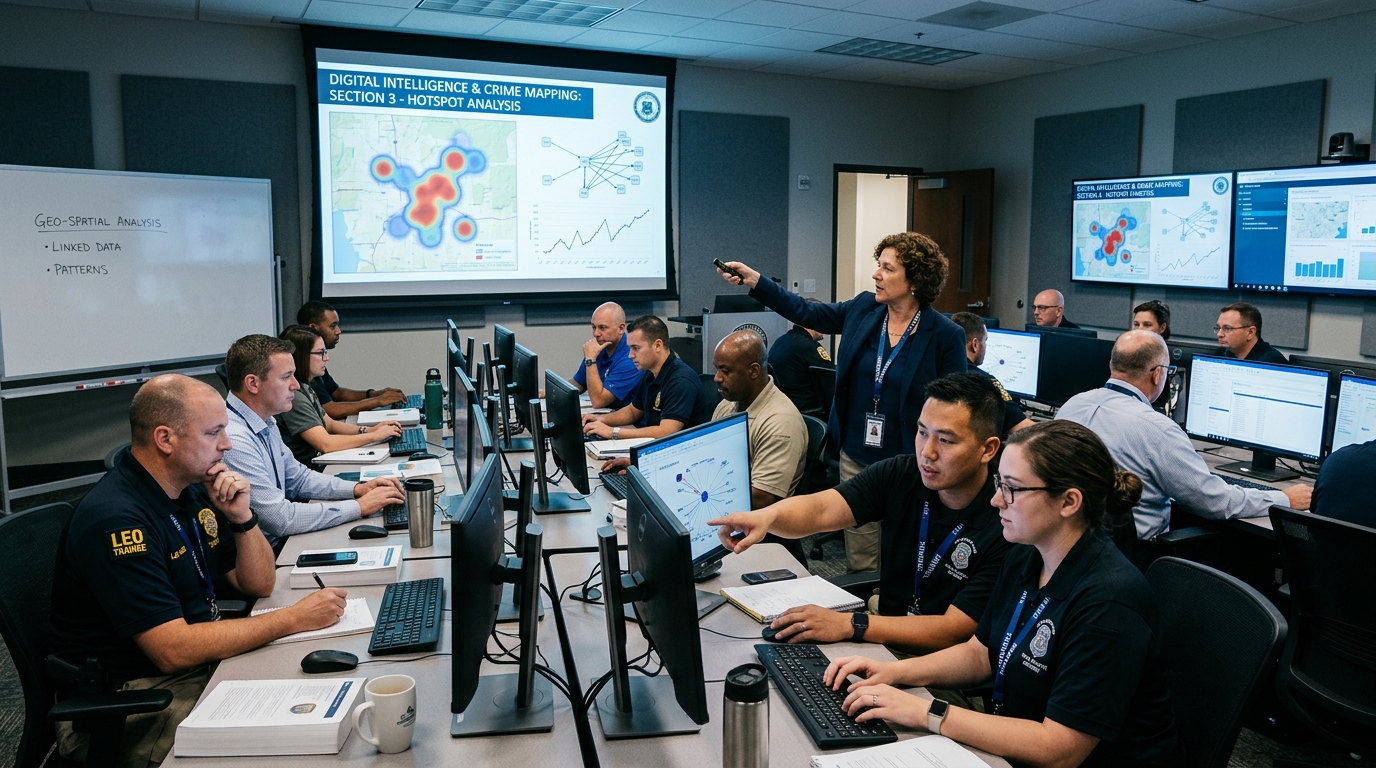
The demand for trained crime and intelligence analysts continues to grow across California. Police departments, fusion centers, and real-time crime centers now rely heavily on data analysis, GIS mapping, and intelligence gathering to support investigations and public safety efforts. As a result, more professionals are exploring training programs to build these skills.
However, one question often comes up first: should you choose online or in-person training?
Both options offer clear benefits. Still, the right choice depends on your learning style, schedule, career goals, and level of experience.
For professionals searching for Law enforcement analyst training in CA, understanding the differences between these learning formats can help them make a better long-term decision.
Why Analyst Training Matters Today
Modern law enforcement agencies collect large amounts of data every day. Analysts help turn that information into actionable insights. They identify crime patterns, map hotspots, track trends, and support officers during investigations.
Training programs now cover areas such as:
- Crime analysis
- Intelligence analysis
- GIS and crime mapping
- Real-time crime center operations
- Excel and Power BI
- Database management
- Geographic profiling
Many California-based training providers also offer California POST-certified courses and practical exercises designed around real-world scenarios.
Because the role has become more technical, structured training is no longer optional for many agencies.
Online Training: Flexible and Accessible
Online learning has become more common in analyst training over the last several years. Many providers now offer live virtual classes and on-demand programs that allow students to learn remotely.
Advantages of Online Training
1. Greater Flexibility
One of the main advantages of online courses is their convenience, which allows students to complete lessons from home and study at their own pace. This flexibility is particularly beneficial for working professionals, shift-based employees, and students who are managing multiple responsibilities.
Furthermore, on-demand courses provide learners with the opportunity to revisit lessons whenever needed, enhancing their understanding and retention of the material. Overall, the convenience of online learning makes it an attractive option for a diverse range of individuals.
2. Lower Travel Costs
California is a vast state, and traveling to training sites in cities like Los Angeles, Orange County, or Sacramento can quickly escalate expenses. However, online learning offers a practical solution by eliminating several costs associated with in-person training. By moving training to a virtual format, agencies can avoid hotel expenses, fuel costs, and the time spent commuting.
This shift not only streamlines the training process but can also lead to significant cost reductions, especially for organizations training multiple employees. Ultimately, embracing online learning can enhance efficiency while preserving resources.
3. Easier Access to Specialized Topics
Remote learning gives students access to instructors and niche courses that may not exist locally.
For example, some online programs focus specifically on:
- GIS crime mapping,
- geographic profiling,
- or real-time analysis workflows.
This allows students to build targeted skills without waiting for local classes.
Challenges of Online Training
Despite the convenience, online learning also has limitations.
Reduced Hands-On Interaction
Analyst work typically includes practical exercises, collaboration, and troubleshooting. Some students benefit more from direct, in-person guidance from instructors. Virtual environments can also restrict group discussion, networking, and scenario-based activities.
Requires More Self-Discipline
Online learning depends heavily on personal motivation. Without a classroom setting, some students struggle to stay focused or complete coursework consistently.
In-Person Training: Practical and Interactive
In-person analyst training remains popular across California, especially for technical and operational subjects.
Programs often take place in computer labs or agency training centers where students complete exercises in real time.
Advantages of In-Person Training
1. Hands-On Learning
Many students learn technical skills more quickly in a classroom environment. In-person courses typically feature live demonstrations, mapping exercises, group problem-solving, and instructor feedback, all of which can enhance retention and boost confidence.
For example, crime mapping courses frequently involve working directly with GIS software and real datasets during class exercises.
2. Better Networking Opportunities
Classroom settings naturally foster interaction, allowing students to connect with current analysts, supervisors, instructors, and agency staff. These connections can provide valuable career advice, mentorship, and potential job opportunities.
3. Real-Time Scenario Training
Some in-person courses recreate real operational environments. For example, real-time crime analysis classes might feature live radio communication, incident response drills, and teamwork for decision-making. These experiences are challenging to fully replicate in an online setting.
Challenges of In-Person Training
Less Schedule Flexibility
Classroom courses happen on fixed dates. This can be difficult for professionals working rotating shifts or managing agency responsibilities.
Missing a session may also mean waiting months for the next course.
Higher Overall Costs
In-person programs often involve:
- travel,
- lodging,
- meals,
- and time away from work.
For smaller agencies, these costs can become a barrier.
Which Option Is Better?
There is no single answer for every student.
Online training works best for:
- flexible learning,
- introductory topics,
- and busy professionals.
Meanwhile, in-person training may be more effective for:
- technical software instruction,
- operational exercises,
- and collaborative learning.
Many professionals now combine both formats. They complete foundational lessons online and attend classroom courses for advanced or hands-on subjects.
This blended approach offers both flexibility and practical experience.
Final Thoughts
California agencies continue to expand their use of data-driven policing, GIS mapping, and intelligence-led operations. Because of this shift, analyst training has become more valuable than ever.
Both online and in-person learning formats can help professionals build strong analytical skills. The best option depends on individual goals, learning preferences, and available resources.
