

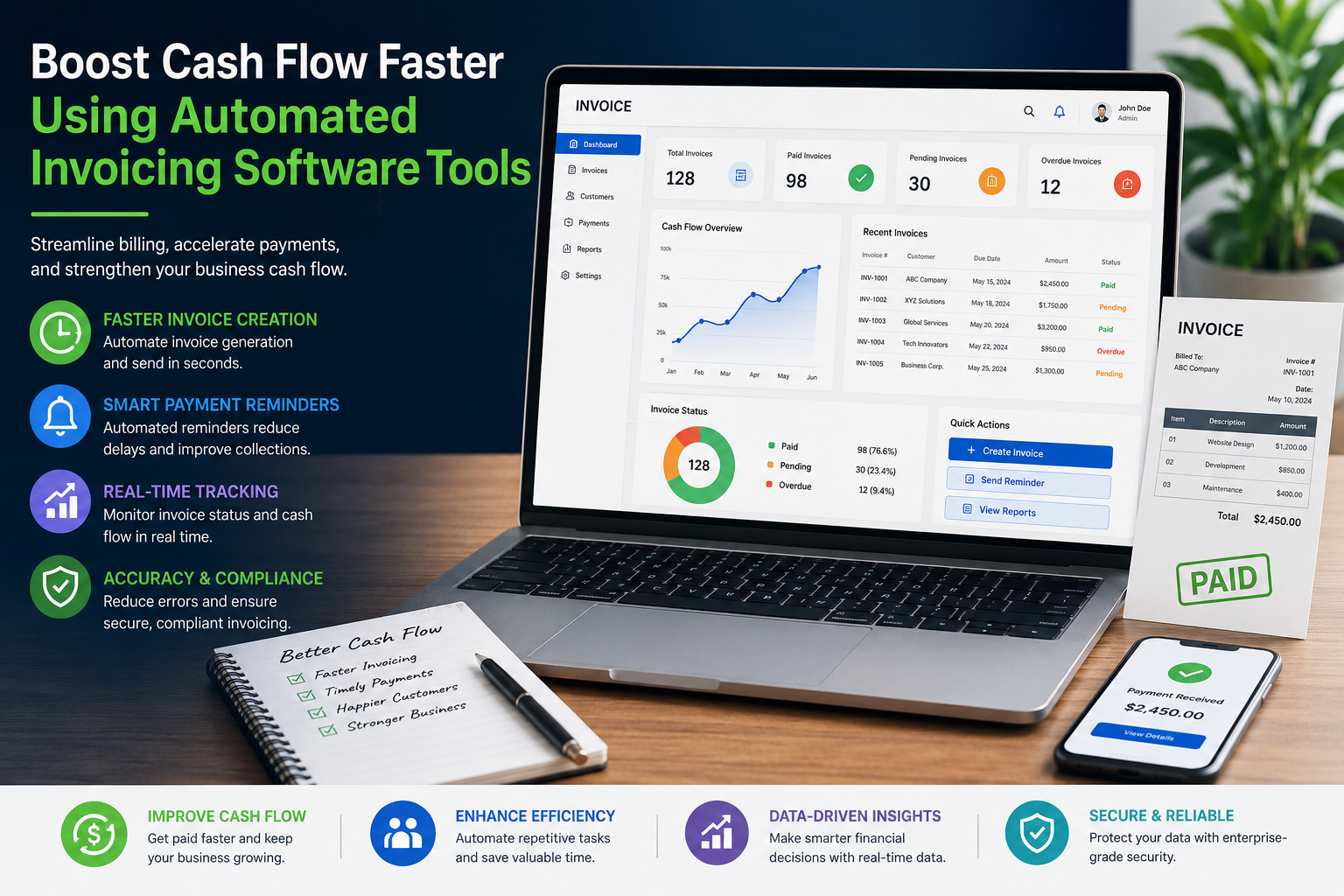
Cash flow is the foundation of business stability, yet many organizations continue to face delays caused by manual invoicing processes. Slow invoice creation, approval bottlenecks, data entry errors, and inconsistent payment follow-ups can significantly affect working capital. Automated invoicing software tools address these challenges by streamlining invoice generation, tracking, and payment management. By reducing administrative workload and improving accuracy, businesses can accelerate collections, strengthen financial visibility, and maintain healthier cash flow without increasing operational complexity or placing additional pressure on accounting teams.
Key Statistics Showing the Impact of Invoice Automation Today
Several industry studies highlight the measurable value of invoice automation:
- Businesses using automated invoicing systems can reduce invoice processing time by up to 70%.
- Automated workflows help decrease billing errors that commonly lead to payment disputes and delays.
- Organizations implementing digital invoicing often experience faster payment cycles compared to manual methods.
- Finance teams can save dozens of administrative hours each month through automated invoice generation and tracking.
- Improved invoice accuracy contributes to stronger customer relationships and fewer payment-related conflicts.
- Real-time financial reporting enables quicker decision-making and more effective cash flow planning.
These statistics demonstrate how automation directly supports operational efficiency while improving the speed at which revenue enters the business.
Common Cash Flow Challenges Created by Manual Billing Systems
Many companies underestimate the financial impact of outdated invoicing methods. Manual processes often introduce inefficiencies that affect both revenue collection and resource allocation.
Some of the most common challenges include:
- Delayed invoice creation after project completion
- Data entry mistakes that require corrections
- Lost or misplaced invoices
- Inconsistent payment reminders
- Limited visibility into outstanding receivables
- Difficulty tracking invoice status across departments
- Increased administrative costs
When invoices are delayed, payment cycles naturally become longer. Even a few extra days in collections can create pressure on payroll, supplier payments, inventory management, and growth initiatives.
Manual systems also make forecasting more difficult. Without accurate, real-time information, finance teams may struggle to identify cash shortages before they become significant operational issues.
How Automated Workflows Reduce Delays Across Billing Stages
Automated invoicing software tools create a structured workflow that eliminates many of the delays associated with traditional billing methods.
The process typically includes:
- Automatic invoice generation based on predefined triggers.
- Digital approval workflows that reduce waiting times.
- Real-time validation of customer and transaction data.
- Electronic invoice delivery to clients.
- Automated reminders for upcoming and overdue payments.
- Continuous monitoring of invoice status.
By removing repetitive manual tasks, businesses can issue invoices much faster after goods are delivered or services are completed. Earlier invoice delivery often leads to earlier payments.
Automation also ensures consistency. Every invoice follows the same workflow, reducing the likelihood of missed approvals, duplicate records, or communication gaps that slow down collections.
Advanced Invoice Tracking Features That Improve Visibility Fast
One of the most valuable benefits of automation is improved visibility throughout the accounts receivable process.
Modern invoicing platforms provide dashboards that allow finance teams to monitor:
- Outstanding invoices
- Payment due dates
- Customer payment history
- Collection performance
- Aging reports
- Cash flow projections
With real-time access to financial information, organizations can identify risks before they escalate. For example, recurring late-payment patterns can be detected early, enabling proactive communication with customers.
Businesses using white label lnvoice processing software often gain additional flexibility because they can tailor invoice management experiences to specific operational requirements while maintaining a consistent workflow structure.
Enhanced visibility also supports strategic planning by providing a clearer understanding of expected cash inflows and potential collection challenges.
Benefits of Integrating Billing Tools With Financial Platforms
Integration is a critical factor in maximizing the effectiveness of invoicing automation.
When invoicing software connects with accounting systems, customer relationship management platforms, enterprise resource planning solutions, and payment gateways, data moves seamlessly across the organization.
Key advantages include:
- Reduced duplicate data entry
- Improved financial accuracy
- Faster reconciliation processes
- Better reporting capabilities
- Stronger compliance management
- Centralized financial records
Integrated environments help finance teams operate more efficiently because information is updated automatically across connected systems.
Organizations seeking specialized operational requirements may also explore bespoke software development services to create customized integrations that align with unique workflows and industry-specific compliance needs.
The result is a more connected financial ecosystem that supports faster decision-making and improved cash flow management.
Strategies for Improving Collections Through Automated Reminders
Invoice automation extends beyond invoice creation. It also plays a major role in improving collections performance.
Many businesses lose valuable time because payment follow-ups depend on manual communication. Automated reminder systems ensure that customers receive timely notifications throughout the payment cycle.
Effective reminder strategies include:
- Sending confirmation messages after invoice delivery
- Issuing reminders before due dates
- Triggering overdue notices automatically
- Escalating communications based on payment status
- Providing convenient payment links
These workflows help maintain consistent communication without requiring additional administrative effort.
Customers are less likely to overlook invoices when reminders arrive at appropriate intervals. As a result, organizations can reduce overdue accounts and improve cash flow predictability.
Companies using White Label Invoice Processing Software frequently configure reminder schedules according to customer segments, contract terms, and industry practices, allowing for more effective collection management.
Security Compliance Requirements for Digital Invoice Management
As invoicing becomes increasingly digital, security and compliance remain essential considerations.
Financial documents contain sensitive information that must be protected against unauthorized access, fraud, and data breaches.
Important security capabilities include:
- Data encryption
- Role-based access controls
- Multi-factor authentication
- Audit trails
- Secure cloud storage
- Regulatory compliance monitoring
Strong security frameworks protect both businesses and customers while maintaining trust throughout the billing process.
Compliance is equally important, particularly for organizations operating across multiple jurisdictions. Automated systems help enforce documentation standards, retention policies, and reporting requirements.
By embedding compliance controls directly into workflows, businesses can reduce risk while maintaining operational efficiency.
Organizations adopting White Label Invoice Processing Software often benefit from configurable security settings that align with their governance and regulatory obligations.
Measuring Long Term Financial Gains From Invoice Automation Systems
The value of invoice automation should be evaluated through measurable performance indicators rather than short-term convenience alone.
Common metrics include:
- Days Sales Outstanding (DSO)
- Average invoice processing time
- Invoice error rates
- Collection success rates
- Administrative cost reductions
- Cash flow forecasting accuracy
Monitoring these indicators allows organizations to quantify the financial impact of automation over time.
Beyond immediate efficiency gains, automation supports scalability. As transaction volumes increase, businesses can process larger numbers of invoices without proportional increases in staffing requirements.
Long-term benefits often include improved customer satisfaction, stronger financial control, greater operational resilience, and enhanced resource allocation.
These advantages contribute to sustainable growth while helping organizations maintain healthy working capital even during periods of rapid expansion.
Building a Future Ready Finance Process With Smart Automation
Automated invoicing software tools have become an essential component of modern financial operations. By eliminating manual inefficiencies, accelerating invoice delivery, improving payment tracking, and supporting stronger collection practices, these solutions help businesses maintain better control over their financial performance. Organizations that invest in streamlined billing processes are better positioned to improve operational efficiency, enhance decision-making, and create a more stable financial foundation for long-term success. As digital transformation continues to reshape financial management, automation will remain a key driver of faster, more predictable revenue cycles.
