


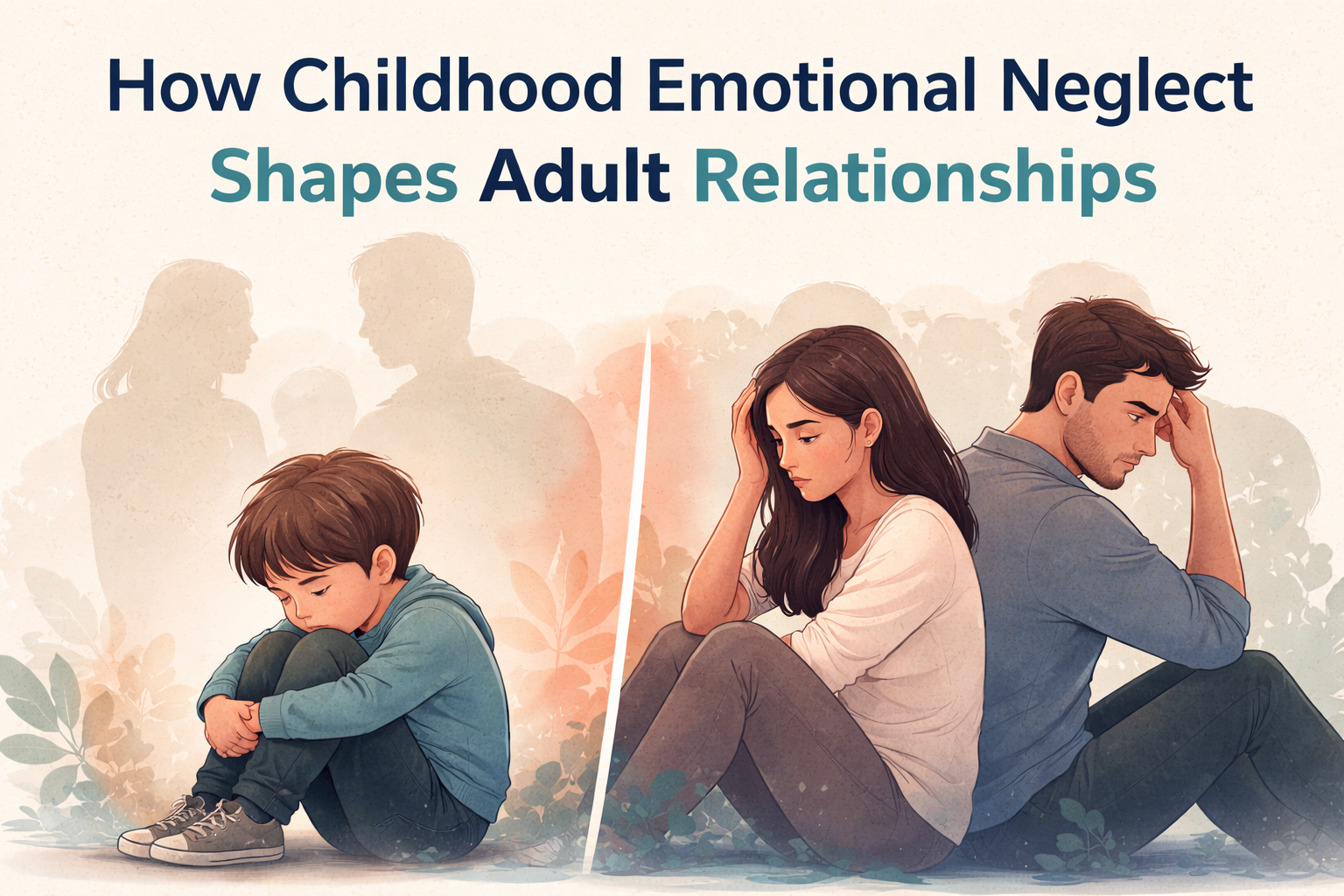
Many adults struggle with trust, emotional intimacy, self-worth, or communication in relationships without fully understanding why. While these challenges may seem unrelated to childhood experiences, research increasingly points to a powerful connection between early emotional experiences and adult relationship patterns. One of the most overlooked factors is Childhood Emotional Neglect (CEN).
Unlike physical abuse or other visible forms of trauma, childhood emotional neglect is often defined by what did not happen rather than what did happen. It occurs when a child’s emotional needs are consistently ignored, dismissed, or unmet by caregivers. Although the effects may remain hidden for years, they can significantly influence emotional well-being, self-esteem, and attachment styles in adulthood. Research suggests that emotional neglect can contribute to difficulties with emotional regulation, trust, intimacy, and the development of insecure attachment patterns.
This article explores how childhood emotional neglect shapes adult relationships, emotional health, and personal development, while offering practical insights into healing and recovery.
What Is Childhood Emotional Neglect?
Childhood emotional neglect occurs when caregivers fail to recognize, validate, or respond appropriately to a child’s emotional needs. Unlike overt abuse, emotional neglect often exists in otherwise functional families where physical needs are met, but emotional support is lacking.
Examples of emotional neglect include:
- Ignoring a child’s feelings
- Dismissing emotional expressions
- Failing to provide comfort during distress
- Minimizing fears or concerns
- Expecting children to manage emotions independently
- Rarely discussing feelings or emotional experiences
Children naturally depend on caregivers to teach them how to identify, understand, and regulate emotions. When this emotional guidance is absent, they often develop coping mechanisms that continue into adulthood.
The Connection Between Emotional Neglect and Attachment
Attachment theory suggests that early interactions with caregivers create internal beliefs about relationships, safety, and emotional connection. These beliefs influence how people relate to others throughout life. Consistent emotional support helps children develop secure attachment, while emotional neglect often contributes to insecure attachment patterns.
Attachment styles generally include:
Secure Attachment
Individuals with secure attachment feel comfortable with intimacy, trust others, and maintain healthy emotional boundaries.
Anxious Attachment
People with anxious attachment often fear abandonment, seek excessive reassurance, and may become overly dependent on relationships.
Avoidant Attachment
Avoidant individuals tend to suppress emotions, value extreme independence, and struggle with vulnerability or emotional closeness.
Disorganized Attachment
This attachment style combines both anxious and avoidant behaviors, often creating confusion and instability in relationships.
Children who experience emotional neglect frequently develop anxious, avoidant, or disorganized attachment patterns because their emotional needs were not consistently acknowledged or met.
Signs of Childhood Emotional Neglect in Adults
Many adults are unaware that emotional neglect influenced their development. Since neglect is often subtle, its effects can be difficult to recognize.
Common signs include:
Difficulty Identifying Emotions
Many adults struggle to recognize or describe their feelings. Emotional experiences may feel confusing, overwhelming, or disconnected. Researchers have linked emotional neglect with difficulties in identifying and expressing emotions.
Low Self-Esteem
When emotional needs are repeatedly ignored, children may internalize the belief that their feelings are unimportant. This can lead to chronic self-doubt and low self-worth in adulthood.
Fear of Vulnerability
Adults who experienced emotional neglect often avoid sharing emotions because they learned that expressing feelings leads to disappointment or rejection.
Strong Independence
While independence is generally positive, excessive self-reliance can become a protective strategy that prevents healthy emotional connection. Emotional neglect frequently encourages hyper-independence.
Relationship Difficulties
Trust issues, communication problems, emotional distance, and fear of intimacy are common consequences of emotional neglect.
How Childhood Emotional Neglect Affects Adult Relationships
Relationships often become the area where childhood emotional neglect has the greatest impact.
Difficulty Trusting Others
When caregivers fail to provide consistent emotional support, children learn that others may not be reliable sources of comfort. This belief can persist into adulthood, making trust difficult.
People may:
- Question others’ intentions
- Expect disappointment
- Avoid depending on others
- Struggle to accept support
Fear of Abandonment
Individuals with anxious attachment often worry that loved ones will leave them. Small relationship challenges may trigger intense fears of rejection or abandonment.
Emotional Withdrawal
Avoidant attachment can lead people to distance themselves emotionally when relationships become too close. They may struggle to express affection, discuss feelings, or rely on others for support.
People-Pleasing Behaviors
Some adults learn to prioritize other people’s needs over their own in an attempt to maintain connection and avoid conflict.
This pattern often results in:
- Difficulty setting boundaries
- Emotional exhaustion
- Resentment
- Loss of personal identity
Communication Challenges
Adults who never learned emotional language during childhood may find it difficult to communicate feelings effectively. Instead of expressing emotions openly, they may withdraw, become defensive, or avoid difficult conversations.
Emotional Well-Being and Mental Health Consequences
The effects of childhood emotional neglect extend beyond relationships and can significantly impact overall mental health.
Anxiety
Unmet emotional needs can create a heightened sensitivity to stress, uncertainty, and rejection. Many adults experience chronic anxiety and excessive worry.
Depression
Research consistently associates emotional neglect with increased risk of depressive symptoms, including feelings of emptiness, loneliness, and hopelessness.
Emotional Numbness
Some individuals disconnect from emotions altogether as a protective mechanism. This emotional numbness can affect both negative and positive experiences.
Chronic Shame
Children often blame themselves when emotional needs are not met. As adults, they may carry persistent feelings of inadequacy or unworthiness.
Social Difficulties
Studies have found that childhood emotional neglect can contribute to long-term social functioning challenges and relationship avoidance.
Why Emotional Neglect Often Goes Unrecognized
One reason emotional neglect is so damaging is that it often remains invisible.
Many adults say:
- “My childhood wasn’t that bad.”
- “My parents provided everything I needed.”
- “Nothing traumatic happened.”
However, emotional neglect is not about what happened. It is about what was missing. The absence of emotional validation, support, and connection can leave lasting emotional wounds despite an otherwise stable upbringing.
Because there may be no obvious traumatic event to identify, many people spend years struggling without understanding the root cause of their difficulties.
Healing from Childhood Emotional Neglect
The good news is that attachment patterns and emotional habits are not permanent. Healing is possible through awareness, self-compassion, and intentional growth.
Develop Emotional Awareness
Learning to recognize and name emotions is an important first step. Journaling, mindfulness practices, and emotional check-ins can help strengthen emotional awareness.
Challenge Negative Beliefs
Many adults carry beliefs such as:
- My needs do not matter.
- I should handle everything alone.
- Showing emotions is a weakness.
Identifying and challenging these beliefs can create healthier emotional patterns.
Build Healthy Relationships
Supportive relationships provide opportunities to experience emotional safety, trust, and connection. Positive relationships can help reshape attachment patterns over time.
Practice Self-Compassion
Instead of criticizing yourself for emotional struggles, recognize that many coping strategies developed as survival mechanisms during childhood.
Seek Professional Support
Therapy can provide valuable tools for understanding emotional neglect, improving emotional regulation, and developing secure attachment behaviors. Therapeutic approaches such as Cognitive Behavioral Therapy (CBT), attachment-focused therapy, and trauma-informed counseling may be particularly beneficial.
Moving Toward Secure Attachment
Developing secure attachment does not require a perfect childhood. It requires consistent effort, self-awareness, and healthy relational experiences.
Signs of growing attachment security include:
- Greater emotional awareness
- Improved communication
- Stronger boundaries
- Increased self-worth
- Comfort with intimacy
- Reduced fear of rejection
As individuals learn to meet their own emotional needs and connect with supportive people, they can gradually create healthier relationship patterns. For more insights, visit WellU Digital.
Conclusion
Childhood emotional neglect may be invisible, but its effects can influence emotional well-being, self-esteem, and relationships for years. When emotional needs are consistently overlooked during childhood, children often develop attachment patterns that shape how they connect with others as adults. Trust issues, fear of vulnerability, emotional withdrawal, anxiety, and low self-worth are all common outcomes.
Fortunately, awareness is the first step toward healing. By understanding the connection between childhood emotional neglect and adult attachment, individuals can begin to break unhealthy patterns, strengthen emotional resilience, and develop healthier relationships. Healing takes time, but with self-compassion, supportive relationships, and professional guidance, it is possible to build a more secure and emotionally fulfilling future.
