

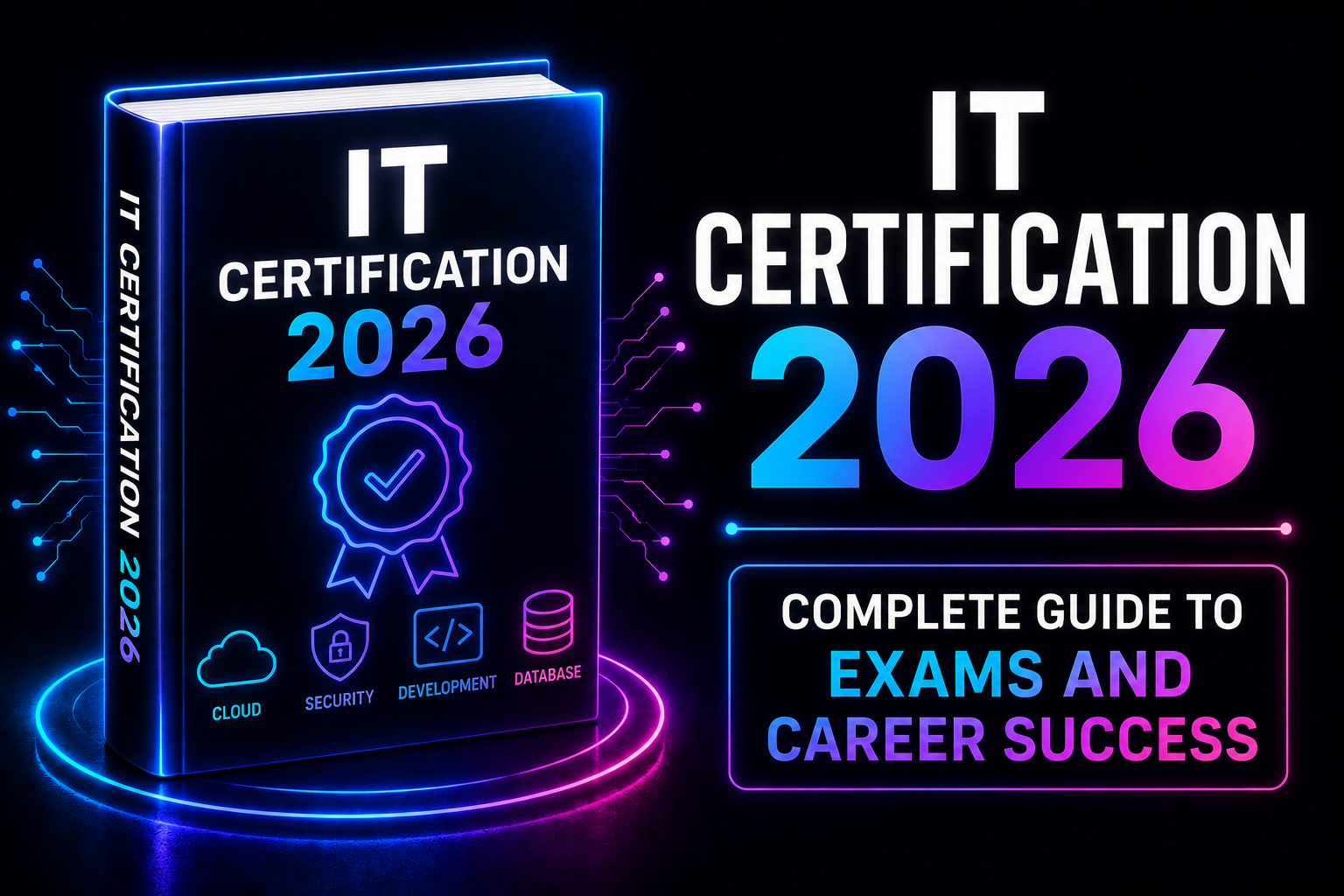
IT certification in 2026 is more than a line on a resume. It is a structured way to learn job-ready skills, prove your knowledge, and move toward better career options. As technology keeps changing, employers want people who can keep up with cloud platforms, cybersecurity risks, automation, data tools, and support systems.
A certification does not guarantee success by itself. It works best when you choose the right exam, study with purpose, and connect what you learn with real tasks. For beginners, it can create a clear starting point. For working professionals, it can help refresh skills and support career growth.
Why IT Certifications Still Matter in 2026
Many companies now focus more on skills than job titles alone. A certification can help show that you have studied a recognized topic and passed a formal exam. It gives employers a quick signal that your knowledge matches a certain level.
Certifications are especially useful in IT because tools and job roles change often. A person working in support may need cloud knowledge. A network technician may want to move into cybersecurity. A developer may need DevOps or AI-related skills.
In each case, certification gives learning a path instead of leaving the person to study random material.
Popular Certification Paths to Consider
The best IT certification depends on your current level and career goal. Some exams are made for beginners, while others require deeper experience.
| Career direction | Common certification examples | Best for |
|---|---|---|
| IT support | CompTIA A+, ITF+ | Beginners and help desk learners |
| Networking | Network+, CCNA | Support staff and network learners |
| Cybersecurity | Security+, CEH, CISSP | Security analysts and ethical hacking learners |
| Cloud computing | AZ-900, AWS Cloud Practitioner, SAA-C03 | Cloud beginners and infrastructure roles |
| Microsoft roles | AZ-104, SC-900, MS-900 | Azure, security, and Microsoft 365 learners |
| Project and service management | PMP, ITIL 4 | Team leads, managers, and service roles |
This table is only a starting point. Always check the latest official exam page before choosing because objectives and versions can change.
Start with Your Career Goal
Many learners make the mistake of choosing a certification only because it is popular. A better method is to start with the role you want.
If you want an entry-level IT job, a support or networking certification may be useful. If you want cybersecurity, start with security basics before jumping into advanced hacking or management exams. If cloud is your goal, begin with fundamentals and then move toward administrator, architect, or developer certifications.
Read job descriptions for your target role. Look for repeated tools, skills, and certification names. This will help you choose an exam that supports real career movement.
This concept becomes easier with Cert Mage’s YouTube explanation: 🔻

Understand the Exam Before You Study
Every certification exam has its own format. Some include multiple-choice questions. Some include performance-based tasks, case studies, labs, or scenario-based questions.
Before studying deeply, review the official exam guide. Check the exam domains, question style, time limit, passing score, and recommended experience. This gives you a clear view of what to expect.
Do not rely only on short notes or random videos. A proper study plan should follow the official objectives first. After that, you can add books, courses, labs, and practice questions.
Build a Study Plan That You Can Follow
A simple plan is better than an unrealistic one. You do not need to study all day. Consistent short sessions can work well.
Start by dividing the exam topics into weekly sections. Study one topic at a time, make short notes, and review examples. After finishing each section, test yourself with practice questions.
Use your wrong answers as a guide. If you keep missing questions about networking ports, access control, cloud pricing, or risk management, that topic needs more time.
For technical exams, hands-on practice is important. Use labs, sandboxes, free-tier cloud accounts, or practice environments where possible. Reading alone is rarely enough for practical IT roles.
What Makes Certification Preparation Effective?
Effective preparation is active. You should not just read pages and hope the information stays in your memory.
Try to explain each topic in your own words. Create small examples. Compare similar tools. Practice with realistic questions. Review your mistakes. Repeat weak topics until they become clear.
A resource such as www.certmage.com can support exam-style revision after you understand the core concepts. The best use of practice material is to identify gaps and improve confidence, not memorize answers without learning.
Good preparation should make you better at the job skill, not only better at taking the exam.
How Certifications Support Career Success
Certifications can help in several ways. They can improve resume visibility, support interview confidence, and show that you are serious about professional growth.
For beginners, certification may help open the first door. For experienced workers, it may support promotion, a department change, or a move into a higher-paying field.
However, career success also depends on communication, problem-solving, projects, experience, and consistency. A certification is strongest when it is part of a wider plan.
After passing, update your resume and LinkedIn profile. Add the credential to your skills section. Also prepare a short explanation of what you learned and how it connects to the role you want.
Avoid Common Certification Mistakes
Do not collect random certifications without a clear purpose. Too many unrelated credentials can make your career direction look confused.
Do not choose an exam only because someone online says it pays well. Salary depends on many things, including location, experience, company size, role level, and market demand.
Do not ignore official resources. Certification vendors update exams, and outdated material can waste your time.
Most importantly, do not stop learning after passing. The exam is only one step. Real career growth comes from applying the knowledge in practical work.
Closing Summary
IT certification in 2026 can be a smart career move when chosen carefully. It can organize your learning, prove current knowledge, and help you move toward better opportunities.
The key is to match the certification with your goal. Start with the role you want, review the exam objectives, build a realistic study plan, and practice regularly. A certification can help your career, but your effort turns it into real value.
Cert Mage provides an additional visual reference through its Instagram post.
FAQs
Which IT certification is best for beginners in 2026?
CompTIA A+, ITF+, AZ-900, and AWS Cloud Practitioner are common beginner choices. The best option depends on whether you want support, cloud, networking, or security roles.
Can an IT certification help me get a job?
Yes, it can improve resume visibility and show focused learning. However, employers also look for practical skills, projects, communication ability, and confidence during interviews.
How long does it take to prepare for an IT certification?
Preparation time depends on the exam level and your experience. Many beginner exams need several weeks, while advanced certifications may require months of focused study and practice.
Should I choose cloud or cybersecurity certification first?
Choose cloud if you like infrastructure, platforms, and services. Choose cybersecurity if you prefer threats, controls, risk, and protection. Your target job should guide the decision.
Are IT certifications worth it in 2026?
Yes, they can be worth it when they match your career goal. Certifications are most useful when combined with hands-on practice, updated knowledge, and real workplace skills.
Read next: The Role of Certifications in Modern Career Success
