

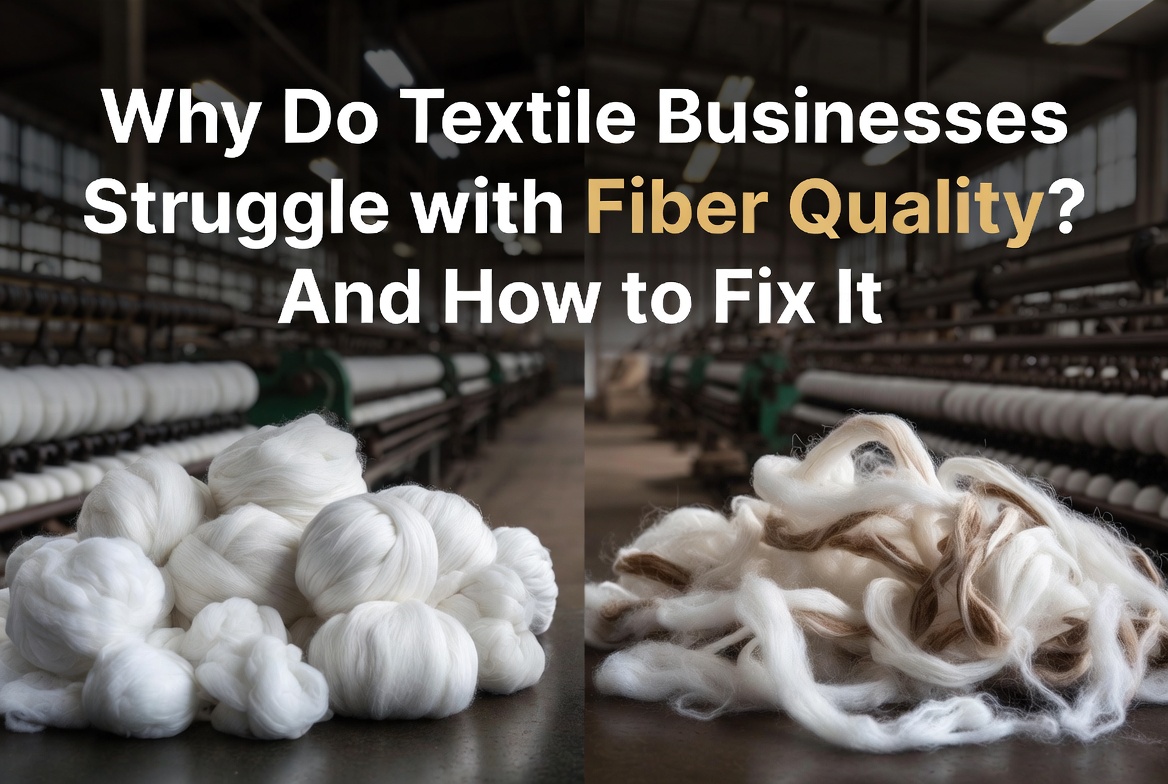
In the textile industry, fiber quality is not just a raw material concern it is the foundation of the entire production process. When fiber quality is inconsistent, everything from spinning efficiency to final fabric strength gets affected. Many textile businesses face repeated issues such as yarn breakage, uneven texture, poor dye absorption, and production delays. These problems are often traced back to one major root cause: the choice of Fiber Supplier.
A reliable fiber supply chain ensures smooth production, consistent output, and better profitability. However, when businesses fail to source fibers from trusted suppliers or lack proper quality checks, the entire manufacturing cycle becomes unstable.
This blog explains why fiber quality issues occur in textile businesses and how to fix them with better sourcing strategies and supplier selection.
Understanding the Importance of Fiber Quality in Textiles
Fiber is the starting point of every textile product. Whether it is cotton yarn, blended yarn, or synthetic fiber, its quality determines:
- Yarn strength and durability
- Fabric softness and texture
- Color absorption and finishing results
- Machine efficiency during spinning
- Waste reduction in production
Even a minor variation in fiber length, strength, or contamination can create major issues in bulk production. That is why selecting the right Fiber Supplier is one of the most critical decisions for any textile manufacturer.
Why Do Textile Businesses Struggle with Fiber Quality?
1. Inconsistent Raw Material Sourcing
One of the biggest reasons for fiber quality issues is inconsistent sourcing. Many businesses switch suppliers frequently based on price instead of quality. This leads to variations in fiber strength, moisture level, and cleanliness.
When different batches of fiber are not uniform, production machines struggle to maintain consistency, resulting in defective yarn and fabric.
2. Lack of Supplier Verification
Not all suppliers maintain industrial-grade quality standards. Some provide mixed-grade or poorly processed fibers that are not suitable for large-scale manufacturing.
Without proper verification of a Fiber Supplier, businesses often end up with low-quality raw materials that affect the entire production line.
3. Poor Storage and Handling Conditions
Even high-quality fibers can degrade if stored incorrectly. Exposure to moisture, dust, or improper packaging can damage fiber structure.
Many textile businesses overlook storage conditions during transportation or warehouse handling, which results in weakened fiber quality before production even starts.
4. Price-Focused Purchasing Decisions
In competitive markets, companies often prioritize low cost over quality. While cheaper fibers may reduce initial expenses, they often lead to higher wastage, machine breakdowns, and rejected batches.
In the long run, poor-quality fibers increase production costs instead of reducing them.
5. Lack of Technical Support from Suppliers
A professional Fiber Supplier does not just provide raw materials, they also offer technical guidance on fiber selection based on machine type, product requirement, and end-use application.
Without this support, businesses may choose the wrong fiber grade, resulting in performance issues.
How to Fix Fiber Quality Issues in Textile Businesses
1. Choose a Reliable Fiber Supplier
The most effective solution is selecting a consistent and trusted Fiber Supplier who follows strict quality standards. A professional supplier ensures:
- Uniform fiber quality across batches
- Proper grading and classification
- Quality testing before dispatch
- Stable long-term supply
This reduces production uncertainty and improves final product consistency.
2. Implement Quality Inspection Systems
Businesses should not rely only on supplier claims. Internal quality inspection is essential before production.
Key checks include:
- Fiber length uniformity
- Moisture content level
- Contamination and impurities
- Strength and elasticity
This helps detect issues before they affect the production line.
3. Work on Long-Term Supplier Relationships
Instead of switching suppliers frequently, businesses should build long-term partnerships with trusted vendors. Long-term cooperation helps suppliers understand your production needs better and maintain consistent quality standards.
4. Improve Storage and Handling Practices
Proper storage conditions can significantly protect fiber quality:
- Keep fibers in dry and clean environments
- Avoid direct sunlight and moisture exposure
- Use proper packaging during transportation
- Maintain warehouse hygiene standards
These steps help preserve fiber integrity until production.
5. Partner with Integrated Raw Material Sources
Many textile companies also benefit from working with a Raw Cotton Supplier who provides directly processed cotton. This reduces middle-stage contamination and ensures better control over raw material quality before it reaches the spinning stage.
By sourcing raw cotton and fiber from reliable channels, manufacturers can maintain better consistency throughout the production cycle.
6. Focus on Technical Collaboration
Modern textile production requires collaboration between manufacturers and suppliers. A good Fiber Supplier provides:
- Guidance on fiber selection based on end product
- Recommendations for blending ratios
- Support for machine compatibility
- Quality improvement suggestions
This technical support improves efficiency and reduces production errors.
Benefits of Using a Trusted Fiber Supplier
Working with a reliable supplier provides several long-term advantages:
- Stable and consistent production output
- Reduced wastage and rework
- Better fabric quality and finishing
- Lower machine downtime
- Improved customer satisfaction
- Cost efficiency over time
Instead of short-term savings, businesses achieve long-term stability and growth.
Common Signs of a Poor Fiber Supplier
Businesses should watch for these warning signs:
- Frequent variation in fiber quality
- Delayed deliveries
- Lack of testing reports
- No technical support
- Inconsistent communication
- High rejection rates in production
If these issues appear regularly, it is time to switch to a more professional Fiber Supplier.
Conclusion
Fiber quality plays a direct role in the success of any textile manufacturing business. Most production issues such as yarn breakage, fabric inconsistency, and high wastage are not machine-related; they originate from poor raw material sourcing.
The solution lies in choosing a reliable Fiber Supplier, maintaining strong quality control systems, and building long-term supplier relationships. Additionally, sourcing from a dependable Raw Cotton Supplier can further improve raw material consistency and production efficiency.
By focusing on quality at the sourcing stage, textile businesses can significantly reduce operational problems and achieve better, more stable production outcomes.
FAQs
1. Why is fiber quality important in textiles?
Fiber quality directly affects yarn strength, fabric texture, durability, and overall production efficiency.
2. What causes poor fiber quality in manufacturing?
Main causes include inconsistent suppliers, poor storage, lack of quality checks, and price-based sourcing decisions.
3. How can I choose the right Fiber Supplier?
Look for consistency, quality testing, technical support, and long-term supply reliability.
4. What is the difference between fiber and raw cotton?
Raw cotton is the natural harvested material, while fiber is processed material used in spinning and textile production.
5. Can a Raw Cotton Supplier improve fiber quality?
Yes, sourcing from a reliable Raw Cotton Supplier ensures better raw material quality, which leads to improved fiber and yarn output.
