In the vast landscape of global fashion, few names carry the weight, intrigue, and avant-garde energy of Comme des Garçons. Founded by Rei Kawakubo in Tokyo during the late 1960s, this brand redefined what clothing could mean. Rather than following trends or focusing solely on beauty, Comme des Garçons built a legacy around deconstruction, imperfection, and conceptual art. Kawakubo’s approach wasn’t about dressing bodies—it was about challenging perceptions.
From its early collections in Japan to its global recognition in Paris, Comme des Garcons has consistently pushed boundaries. The brand’s identity lies in contrast: beauty in distortion, elegance in chaos, and harmony in asymmetry. It is more than a label; it is an ideology that questions the norms of fashion and aesthetics.
Every Comme des Garçons piece seems to whisper rebellion. It’s not just about wearing something beautiful—it’s about expressing individuality, intellect, and emotion through fabric and form.
The Visionary Mind of Rei Kawakubo
Rei Kawakubo is a designer unlike any other. Her creative philosophy doesn’t revolve around trends or commercial appeal; instead, she constructs concepts that question the very essence of design. Kawakubo’s talent lies in her ability to blur the lines between art and fashion, turning each collection into a narrative of emotion and experimentation.
When she first introduced her work to the Paris fashion scene in the early 1980s, it shocked audiences. The torn fabrics, black palettes, and uneven silhouettes were the polar opposite of the glamour dominating fashion at the time. Critics initially labeled it as “anti-fashion,” but over time, that very defiance became Comme des Garçons’ identity.
Her collections often explore dualities—life and death, order and chaos, love and detachment. Every garment becomes a statement, a wearable sculpture that challenges the viewer’s comfort zone. This daring vision has not only redefined modern fashion but also inspired countless designers who view clothing as a medium of storytelling.
The Philosophy Behind the Design
Comme des Garçons clothing embodies contradiction. It rejects the idea that fashion must conform to beauty standards or conventional forms. Instead, Kawakubo treats clothing as a platform to explore ideas, emotions, and the human experience.
The brand’s design philosophy revolves around the unexpected—protruding shapes, unstitched hems, and reimagined tailoring. Each piece conveys a narrative that provokes thought. It’s not unusual for a Comme des Garçons garment to appear abstract, yet beneath the surface lies meticulous craftsmanship and meaning.
The brand also maintains a deep sense of individuality. Wearing Comme des Garçons is a declaration of confidence—an embrace of difference. It attracts those who see fashion as art, and who value innovation over conformity.
Evolution Through the Years
Over the decades, Comme des Garçons has evolved from a niche avant-garde brand into a global cultural symbol. The company’s expansion includes numerous sub-labels and collaborations, each carrying its own distinctive identity while remaining true to the parent brand’s rebellious spirit.
One of the most recognized sub-lines is the Comme des Garcons Shirt collection. This line offers a more approachable interpretation of Kawakubo’s philosophy while maintaining the same intellectual edge. The pieces blend crisp tailoring with abstract details, creating shirts that are both wearable and conceptually rich.
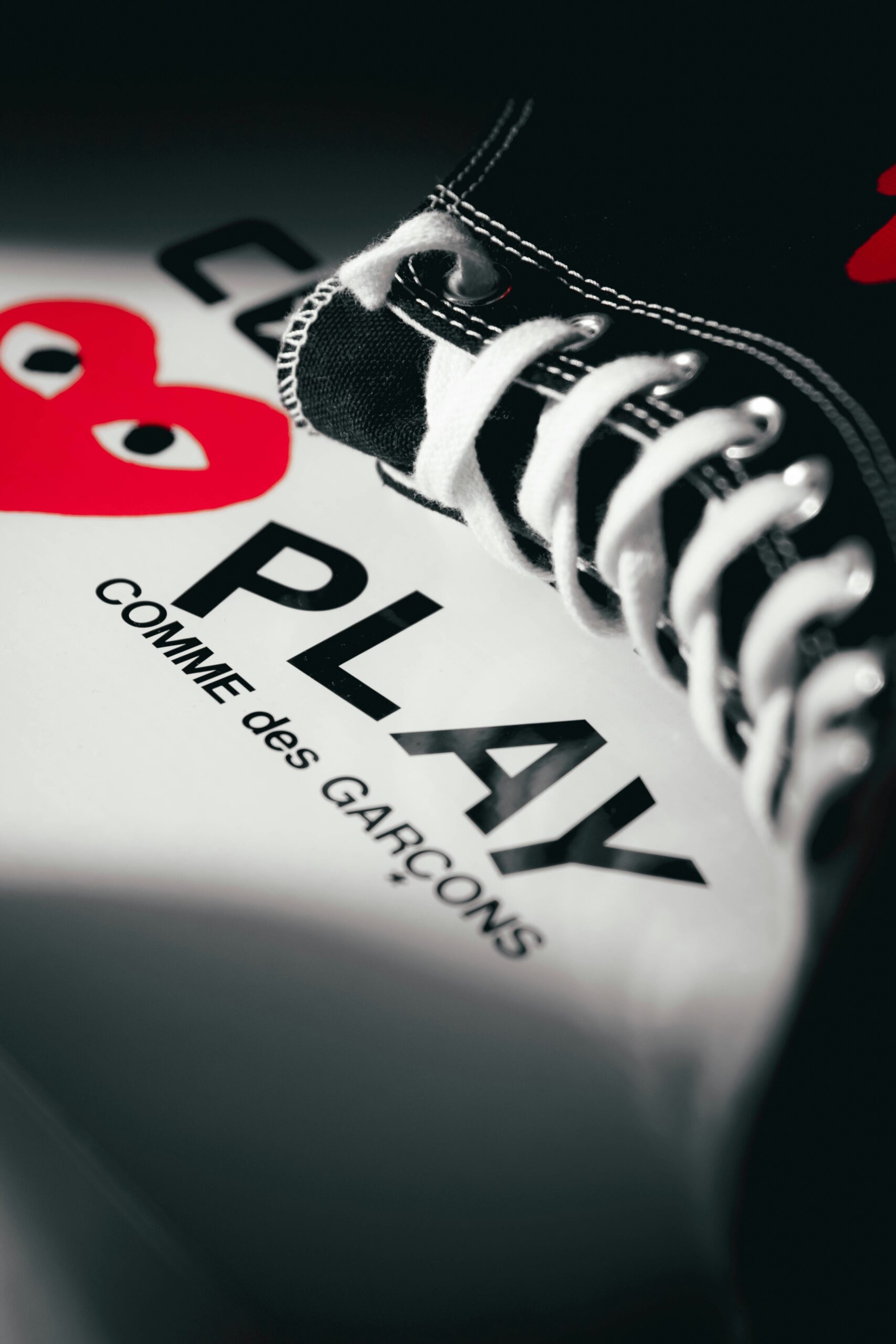
Another significant contribution to pop culture is the collaboration between Comme des Garçons and Converse, resulting in the iconic CDG Converse sneakers. The design, featuring the playful heart logo with eyes, became a symbol of casual luxury and street-style sophistication. It introduced Comme des Garçons to a broader audience while preserving its artistic essence.
These collaborations and evolutions showcase the brand’s adaptability—its ability to remain avant-garde while engaging with mainstream fashion.
Influence on Modern Fashion
Comme des Garçons has shaped contemporary fashion in ways that go far beyond aesthetics. Many modern designers draw inspiration from Kawakubo’s approach to form, space, and concept. Her defiance of traditional fashion norms opened doors for experimentation and self-expression across the industry.
In an era when fast fashion often dominates the market, Comme des Garçons reminds us that creativity has no shortcuts. Each garment requires thought, time, and a willingness to embrace imperfection. Kawakubo’s work has encouraged designers and consumers alike to appreciate the intellectual side of clothing.
Moreover, the brand has significantly influenced the rise of “conceptual fashion,” where garments serve as ideas rather than mere products. Through its shows and designs, Comme des Garçons continues to ask deeper questions: What is beauty? What is functionality? Can something be broken and still be perfect?
The Cultural Impact
Comme des Garçons is not confined to the runway; it is a cultural movement. The brand’s designs have been featured in art museums, exhibitions, and academic discussions. Its influence extends to music, film, and visual art, where its aesthetic of controlled chaos often resonates.
Celebrities, stylists, and artists are drawn to Comme des Garçons because of its fearless individuality. It has become a symbol for those who appreciate depth and meaning in their fashion choices. The iconic red heart logo—especially through lines like Comme des Garçons PLAY—has become instantly recognizable worldwide, proving that even the most avant-garde labels can achieve commercial success without losing their artistic integrity.
The blend of minimalism and eccentricity in its collections bridges worlds—luxury and streetwear, tradition and innovation, art and practicality. This ability to connect opposing forces is what makes Comme des Garçons timeless.
The Comme des Garçons Shirt Collection
The Comme des Garçons Shirt line deserves its own recognition. Unlike the more conceptual main collections, this line focuses on everyday wearability infused with subtle avant-garde twists. The shirts often feature bold prints, patchwork detailing, and asymmetric cuts that give classic menswear a modern artistic touch.
What sets these shirts apart is their ability to transform simplicity into statement. Even the most basic silhouette gains depth through the creative use of texture and structure. This collection appeals to those who value both craftsmanship and creativity—people who want their wardrobe to tell a story.
Each Comme des Garçons Shirt carries the same DNA of rebellion that defines the brand as a whole. It is elegant yet unpredictable, structured yet free-spirited.
The CDG Converse Collaboration
Among the many collaborations Comme des Garçons has undertaken, none have resonated globally quite like the CDG Converse sneakers. The partnership brought together the edgy spirit of Comme des Garçons and the timeless simplicity of Converse.
The result was an instantly iconic design—classic Converse silhouettes adorned with the brand’s signature heart logo. It became a staple in the wardrobes of creatives, fashion lovers, and everyday consumers alike. The sneakers symbolize accessibility without sacrificing artistry.
What makes this collaboration so successful is its authenticity. Rather than merely stamping a logo on an existing product, it merges two worlds—streetwear and high fashion—into one coherent vision. The CDG Converse represents the perfect balance between playfulness and sophistication.
The Legacy of Comme des Garçons
Comme des Garçons is not simply a fashion brand—it is an ongoing dialogue between art and design. Rei Kawakubo’s fearless creativity continues to inspire generations of designers, artists, and thinkers. The brand’s exhibitions, such as the renowned “Art of the In-Between” at the Metropolitan Museum of Art, highlight how fashion can transcend its commercial boundaries and enter the realm of philosophy.
Even as trends evolve, Comme des Garçons remains unwavering in its mission to provoke, question, and innovate. It teaches us that clothing can be an emotional language—a way to communicate who we are and what we believe in.
The legacy of Comme des Garçons lies in its courage to defy expectations. It embraces contradiction, celebrates imperfection, and turns disruption into beauty. Whether through the sculptural garments of its main line, the refined experimentation of the Comme des Garçons Shirt series, or the iconic casual appeal of CDG Converse sneakers, the brand continues to shape how the world views fashion.
Conclusion
Comme des Garçons clothing stands as a symbol of fearless creativity and artistic rebellion. It challenges conventions, transforms imperfections into statements, and redefines beauty through innovation. Each collection, each piece, and each collaboration tells a story that transcends fabric and thread.
In an industry often driven by trends, Comme des Garçons remains timeless—an artistic voice that reminds us that fashion, at its core, is an exploration of identity and imagination. From the structured precision of a Comme des Garçons Shirt to the global appeal of CDG Converse, the brand continues to influence not just what we wear, but how we think about clothing itself.In the vast landscape of global fashion, few names carry the weight, intrigue, and avant-garde energy of Comme des Garçons. Founded by Rei Kawakubo in Tokyo during the late 1960s, this brand redefined what clothing could mean. Rather than following trends or focusing solely on beauty, Comme des Garçons built a legacy around deconstruction, imperfection, and conceptual art. Kawakubo’s approach wasn’t about dressing bodies—it was about challenging perceptions.
From its early collections in Japan to its global recognition in Paris, Comme des Garcons has consistently pushed boundaries. The brand’s identity lies in contrast: beauty in distortion, elegance in chaos, and harmony in asymmetry. It is more than a label; it is an ideology that questions the norms of fashion and aesthetics.
Every Comme des Garçons piece seems to whisper rebellion. It’s not just about wearing something beautiful—it’s about expressing individuality, intellect, and emotion through fabric and form.
The Visionary Mind of Rei Kawakubo
Rei Kawakubo is a designer unlike any other. Her creative philosophy doesn’t revolve around trends or commercial appeal; instead, she constructs concepts that question the very essence of design. Kawakubo’s talent lies in her ability to blur the lines between art and fashion, turning each collection into a narrative of emotion and experimentation.
When she first introduced her work to the Paris fashion scene in the early 1980s, it shocked audiences. The torn fabrics, black palettes, and uneven silhouettes were the polar opposite of the glamour dominating fashion at the time. Critics initially labeled it as “anti-fashion,” but over time, that very defiance became Comme des Garçons’ identity.
Her collections often explore dualities—life and death, order and chaos, love and detachment. Every garment becomes a statement, a wearable sculpture that challenges the viewer’s comfort zone. This daring vision has not only redefined modern fashion but also inspired countless designers who view clothing as a medium of storytelling.
The Philosophy Behind the Design
Comme des Garçons clothing embodies contradiction. It rejects the idea that fashion must conform to beauty standards or conventional forms. Instead, Kawakubo treats clothing as a platform to explore ideas, emotions, and the human experience.
The brand’s design philosophy revolves around the unexpected—protruding shapes, unstitched hems, and reimagined tailoring. Each piece conveys a narrative that provokes thought. It’s not unusual for a Comme des Garçons garment to appear abstract, yet beneath the surface lies meticulous craftsmanship and meaning.
The brand also maintains a deep sense of individuality. Wearing Comme des Garçons is a declaration of confidence—an embrace of difference. It attracts those who see fashion as art, and who value innovation over conformity.
Evolution Through the Years
Over the decades, Comme des Garçons has evolved from a niche avant-garde brand into a global cultural symbol. The company’s expansion includes numerous sub-labels and collaborations, each carrying its own distinctive identity while remaining true to the parent brand’s rebellious spirit.
One of the most recognized sub-lines is the Comme des Garcons Shirt collection. This line offers a more approachable interpretation of Kawakubo’s philosophy while maintaining the same intellectual edge. The pieces blend crisp tailoring with abstract details, creating shirts that are both wearable and conceptually rich.
Another significant contribution to pop culture is the collaboration between Comme des Garçons and Converse, resulting in the iconic CDG Converse sneakers. The design, featuring the playful heart logo with eyes, became a symbol of casual luxury and street-style sophistication. It introduced Comme des Garçons to a broader audience while preserving its artistic essence.
These collaborations and evolutions showcase the brand’s adaptability—its ability to remain avant-garde while engaging with mainstream fashion.
Influence on Modern Fashion
Comme des Garçons has shaped contemporary fashion in ways that go far beyond aesthetics. Many modern designers draw inspiration from Kawakubo’s approach to form, space, and concept. Her defiance of traditional fashion norms opened doors for experimentation and self-expression across the industry.
In an era when fast fashion often dominates the market, Comme des Garçons reminds us that creativity has no shortcuts. Each garment requires thought, time, and a willingness to embrace imperfection. Kawakubo’s work has encouraged designers and consumers alike to appreciate the intellectual side of clothing.
Moreover, the brand has significantly influenced the rise of “conceptual fashion,” where garments serve as ideas rather than mere products. Through its shows and designs, Comme des Garçons continues to ask deeper questions: What is beauty? What is functionality? Can something be broken and still be perfect?
The Cultural Impact
Comme des Garçons is not confined to the runway; it is a cultural movement. The brand’s designs have been featured in art museums, exhibitions, and academic discussions. Its influence extends to music, film, and visual art, where its aesthetic of controlled chaos often resonates.
Celebrities, stylists, and artists are drawn to Comme des Garçons because of its fearless individuality. It has become a symbol for those who appreciate depth and meaning in their fashion choices. The iconic red heart logo—especially through lines like Comme des Garçons PLAY—has become instantly recognizable worldwide, proving that even the most avant-garde labels can achieve commercial success without losing their artistic integrity.
The blend of minimalism and eccentricity in its collections bridges worlds—luxury and streetwear, tradition and innovation, art and practicality. This ability to connect opposing forces is what makes Comme des Garçons timeless.
The Comme des Garçons Shirt Collection
The Comme des Garçons Shirt line deserves its own recognition. Unlike the more conceptual main collections, this line focuses on everyday wearability infused with subtle avant-garde twists. The shirts often feature bold prints, patchwork detailing, and asymmetric cuts that give classic menswear a modern artistic touch.
What sets these shirts apart is their ability to transform simplicity into statement. Even the most basic silhouette gains depth through the creative use of texture and structure. This collection appeals to those who value both craftsmanship and creativity—people who want their wardrobe to tell a story.
Each Comme des Garçons Shirt carries the same DNA of rebellion that defines the brand as a whole. It is elegant yet unpredictable, structured yet free-spirited.
The CDG Converse Collaboration
Among the many collaborations Comme des Garçons has undertaken, none have resonated globally quite like the CDG Converse sneakers. The partnership brought together the edgy spirit of Comme des Garçons and the timeless simplicity of Converse.
The result was an instantly iconic design—classic Converse silhouettes adorned with the brand’s signature heart logo. It became a staple in the wardrobes of creatives, fashion lovers, and everyday consumers alike. The sneakers symbolize accessibility without sacrificing artistry.
What makes this collaboration so successful is its authenticity. Rather than merely stamping a logo on an existing product, it merges two worlds—streetwear and high fashion—into one coherent vision. The CDG Converse represents the perfect balance between playfulness and sophistication.
The Legacy of Comme des Garçons
Comme des Garçons is not simply a fashion brand—it is an ongoing dialogue between art and design. Rei Kawakubo’s fearless creativity continues to inspire generations of designers, artists, and thinkers. The brand’s exhibitions, such as the renowned “Art of the In-Between” at the Metropolitan Museum of Art, highlight how fashion can transcend its commercial boundaries and enter the realm of philosophy.
Even as trends evolve, Comme des Garçons remains unwavering in its mission to provoke, question, and innovate. It teaches us that clothing can be an emotional language—a way to communicate who we are and what we believe in.
The legacy of Comme des Garçons lies in its courage to defy expectations. It embraces contradiction, celebrates imperfection, and turns disruption into beauty. Whether through the sculptural garments of its main line, the refined experimentation of the Comme des Garçons Shirt series, or the iconic casual appeal of CDG Converse sneakers, the brand continues to shape how the world views fashion.
Conclusion
Comme des Garçons clothing stands as a symbol of fearless creativity and artistic rebellion. It challenges conventions, transforms imperfections into statements, and redefines beauty through innovation. Each collection, each piece, and each collaboration tells a story that transcends fabric and thread.
In an industry often driven by trends, Comme des Garçons remains timeless—an artistic voice that reminds us that fashion, at its core, is an exploration of identity and imagination. From the structured precision of a Comme des Garçons Shirt to the global appeal of CDG Converse, the brand continues to influence not just what we wear, but how we think about clothing itself.