

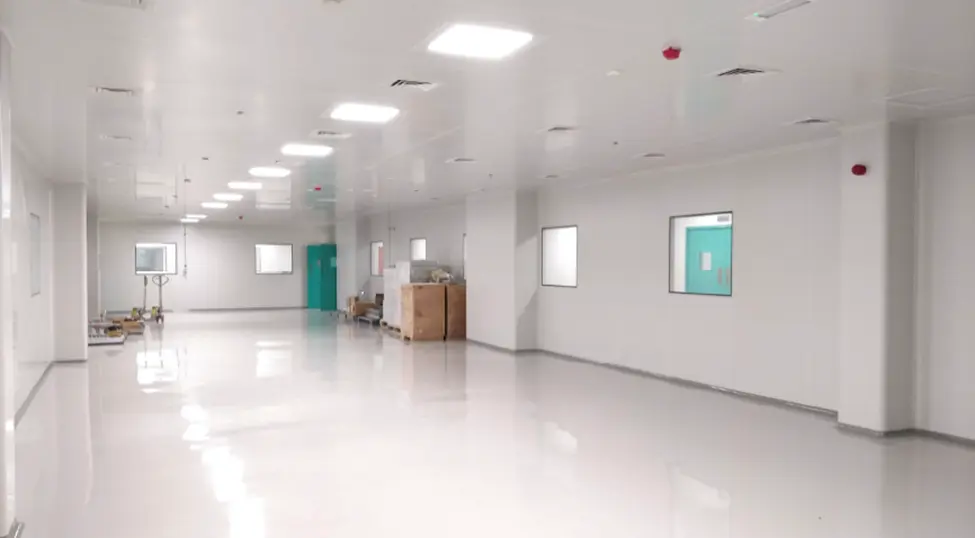
There’s a certain kind of hope that doesn’t make headlines. It doesn’t arrive with fanfare or political speeches. It shows up in white suits, HEPA filters, and tightly controlled air pressure — in rooms where a single floating particle can ruin everything. That’s the world of cleanroom technology, and quietly, steadily, it’s taking root in Iraq.
If you’ve spent any time in Baghdad or Erbil in the last few years, you’ve probably noticed construction of a different kind — not the infrastructure rebuild of the post-conflict era, but something more technical, more precise. Pharmaceutical factories with gleaming interiors. Medical manufacturing units with controlled environments. Laboratories where the air itself is a product. Iraq’s cleanroom industry is still young, but it is very much alive, and it matters far more than most people realise.
Why Cleanrooms Matter More in Iraq Than Anywhere Else
To understand why cleanroom companies are important in Iraq right now, you have to understand what Iraq has been through. Decades of conflict, economic sanctions, and infrastructure neglect left the country dangerously dependent on imported medicines, medical devices, and industrial goods. At its worst, Iraq was importing nearly 80% of its pharmaceutical needs — a vulnerability that became painfully clear during global supply chain disruptions.
Cleanrooms are the answer to that problem. A cleanroom is a controlled environment where airborne particles, temperature, humidity, and pressure are regulated to precise international standards. Without them, you simply cannot manufacture safe pharmaceuticals, reliable medical devices, or high-quality electronics. They are not a luxury — they are a prerequisite for industrial self-sufficiency.
The global cleanroom technology market reflects this urgency. Valued at over USD 10 billion in 2025, the sector is projected to grow at nearly 7% annually through 2031, driven by pharmaceutical expansion, semiconductor manufacturing, and tightening regulatory standards worldwide. Iraq sits at an intersection of all these forces — a country with the economic ambition, the oil-funded capital, and the desperate healthcare need to make cleanroom investment one of its most strategic priorities.
The Companies Laying the Foundation
Iraq’s cleanroom ecosystem is still building itself, but several companies — both homegrown and international — are doing the real work on the ground.
Pioneer Pharmaceuticals in Sulaymaniyah is one of the most cited examples of what’s possible. Operating within GMP-compliant manufacturing environments, Pioneer has invested seriously in cleanroom infrastructure to produce medicines that meet international quality standards. Their facilities represent what Iraq’s pharmaceutical ambition looks like when it’s backed by real technical commitment.
Urok Pharma Group in Baghdad has been another significant story. They’ve built research-and-manufacturing operations that require ISO-classified cleanroom environments, and their expansion has been described — even by religious and civic leaders at their inauguration — as a breakthrough for Iraq’s industrial identity. That kind of emotional resonance tells you something. When a pharmaceutical factory opening draws that much attention, it means the country understands what’s at stake.
Al-Jazeera Pharmaceuticals (JPI) is a quietly determined operation that manufactures tablets, syrups, and topical medicines across 18 Iraqi governorates. They might not have the international profile of some larger players, but their distribution reach is a reminder that cleanroom-enabled manufacturing is not just about export potential — it’s about making safe, affordable medicine accessible to Iraqi patients at home.
On the international side, regional cleanroom specialists from the Gulf — companies like Ziebaq Technical Company, which serves Saudi Arabia, UAE, Kuwait, and neighbouring markets — have begun extending their modular cleanroom expertise into Iraq. Modular cleanroom systems are particularly suited to Iraq’s situation: they can be deployed faster, require less on-site construction labour, and are more cost-effective for a market still building its technical workforce.
Baghdad’s “Health City” and What It Signals
In late 2025, Baghdad announced something genuinely exciting: a five-factory medical complex being described as a “Health City,” spearheaded by the National Health Factory. The project signals that Iraq isn’t thinking small anymore. A multi-factory pharmaceutical campus requires cleanroom infrastructure at scale — not just one controlled room, but entire buildings engineered to prevent contamination across multiple production lines.
This is where Iraq’s cleanroom story gets interesting. The country isn’t just buying technology. It’s building the institutional muscle — the engineers, the quality managers, the regulatory inspectors — needed to sustain a cleanroom industry long-term. That takes time, but it’s happening.
The Honest Challenges
It would be dishonest to write about Iraq’s cleanroom sector without acknowledging the obstacles. High installation and maintenance costs remain a real barrier, especially for smaller Iraqi manufacturers who want to upgrade but lack the capital. The global cleanroom industry itself notes that a shortage of ISO-certified installers is one of the sector’s biggest near-term constraints — and in Iraq, that shortage is even more acute.
Regulatory capacity is another gap. Cleanrooms must be validated and maintained to international standards — ISO 14644, GMP guidelines, WHO requirements. Iraq’s regulatory bodies are improving, but building the institutional expertise to inspect and certify these environments takes sustained investment in human capital, not just physical infrastructure.
Then there’s the climate. Iraq’s extreme heat places unusual demands on the HVAC systems that are the backbone of any cleanroom. Maintaining precise temperature and humidity control when outside temperatures exceed 50°C is an engineering challenge that international companies don’t always fully account for when adapting their systems for the Iraqi market.
Read Also: Womens Basketball Shorts Inspired by Pro and WNBA Styling
A Future Being Built Particle by Particle
Here’s what strikes me most about Iraq’s cleanroom companies: they are doing something deeply optimistic in a country that has had many reasons to lose hope. Every facility they build is a bet on the future — a statement that Iraq will manufacture its own medicines, produce its own medical devices, and eventually compete in industries that require the cleanest environments on earth.
The global cleanroom construction market is expected to nearly double by 2035, reaching USD 12 billion. The Middle East and North Africa region is part of that growth story, and Iraq, with its young population, its oil revenues, and its genuine hunger for economic diversification, has every reason to be a significant player.
The white-suited workers in Baghdad’s new pharmaceutical plants may not be famous. The HEPA filters humming above sterile production lines don’t make for dramatic photographs. But in those controlled, contamination-free rooms, something real is being built — an Iraq that makes things, that heals its own people, and that no longer has to wait for the world to send it medicine.
That’s not a quiet revolution anymore. That’s a future arriving, one clean room at a time.
