

Tips to Complete Accounting Homework Faster and More Accurately

Understanding Why Accounting Homework Feels Time-Consuming

Accounting homework often feels overwhelming because it requires precision, logical thinking, and attention to detail. Unlike subjects that rely mainly on memorization, accounting involves calculations, financial analysis, and applying concepts correctly. Even a small mistake in one figure can affect the entire solution, which is why many students spend hours reviewing their work repeatedly.

One of the most effective ways to complete accounting homework faster and more accurately is to understand the structure behind accounting problems instead of simply trying to memorize formulas. When students recognize patterns in journal entries, balance sheets, and financial statements, they become more efficient at solving similar questions. This practical understanding saves time and improves confidence during assignments and exams.

Students also struggle because accounting courses often combine theory with technical application. Topics such as cost accounting, managerial accounting, and financial reporting demand both conceptual understanding and mathematical accuracy. Developing a streamlined study approach can reduce stress while improving academic performance.

Build a Strong Foundation Before Starting Assignments

A major reason accounting homework takes too long is weak conceptual understanding. Students who rush directly into solving problems without reviewing the underlying concepts usually spend more time correcting mistakes later. Building a strong foundation first helps prevent confusion and improves accuracy from the beginning.

Before attempting any assignment, spend a few minutes reviewing the relevant chapter, formulas, and examples from class notes. This small preparation step can dramatically reduce the time needed to solve problems. Understanding how debits and credits work, recognizing account classifications, and knowing the purpose of financial statements are essential skills that make assignments easier.

It is also helpful to maintain organized notes for frequently used formulas and accounting principles. Keeping a separate notebook or digital document for key concepts allows quick reference during homework sessions. Over time, this creates a personalized study resource that speeds up problem-solving.

Many students also benefit from seeking additional academic support when assignments become too complex or deadlines become difficult to manage. Professional academic guidance through an accounting homework service can provide structured assistance and help students better understand challenging topics while maintaining academic progress.

Create a Distraction-Free Study Environment

Your study environment directly affects both speed and accuracy. Accounting requires concentration because calculations and financial entries can easily become incorrect when attention is divided. A noisy environment or constant phone notifications can increase errors and force students to restart calculations multiple times.

Choose a quiet and organized study space before beginning homework. Keep only necessary materials nearby, including textbooks, calculators, notebooks, and financial tables. Eliminating distractions allows the brain to focus entirely on solving accounting problems efficiently.

Time management techniques can also improve productivity. Many successful students use focused study sessions with short breaks in between. This method helps maintain mental sharpness while reducing fatigue. Accounting tasks demand sustained concentration, so regular short breaks can actually improve overall efficiency.

Using accounting software or spreadsheet tools can also help students work faster. Programs like Microsoft Excel simplify calculations, reduce manual errors, and improve organization. Learning basic spreadsheet functions can significantly increase speed when working on financial statements, budgets, or ratio analysis assignments.

Improve Accuracy Through Step-by-Step Problem Solving

Accuracy in accounting comes from following a structured process. Students who try to solve problems too quickly often skip essential steps and make avoidable mistakes. A systematic approach reduces confusion and increases confidence.

Start by carefully reading the assignment question and identifying exactly what is being asked. Many accounting errors occur because students misunderstand the requirements rather than the calculations themselves. After understanding the task, organize the information provided before beginning calculations.

Working through each step methodically helps maintain accuracy. For example, when preparing journal entries, first identify the accounts involved, then determine whether each account should be debited or credited. Following the accounting equation consistently reduces errors and improves efficiency over time.

Checking your work is equally important. Reviewing calculations and comparing answers against accounting principles can prevent costly mistakes. Students who reserve a few minutes at the end of each assignment for verification often achieve better grades while spending less time correcting errors later.

Use Practice to Develop Speed and Confidence

Accounting is a skill-based subject, meaning regular practice directly improves performance. Students who solve accounting problems consistently become faster because they recognize patterns and understand common question formats.

Practice helps build familiarity with financial terminology, accounting standards, and numerical procedures. Repeated exposure to similar problems trains the brain to process information more efficiently. Over time, tasks that once required an hour may only take twenty minutes.

Working on practice exercises outside assigned homework can also strengthen weak areas before exams. Topics like cash flow statements, depreciation methods, and inventory valuation often become easier through repetition. Consistent practice improves both speed and long-term retention.

Another effective strategy is reviewing previously completed assignments. Revisiting corrected mistakes helps students avoid repeating the same errors in future work. This reflective learning process strengthens conceptual understanding while improving academic accuracy.

Leverage Reliable Learning Resources

Modern students have access to a wide range of educational resources that can simplify accounting homework. Video tutorials, online accounting guides, academic databases, and university learning platforms provide additional explanations beyond classroom instruction.

Trusted educational websites and accounting textbooks can clarify difficult concepts and offer alternative problem-solving methods. Resources from recognized organizations such as the American Institute of Certified Public Accountants and International Financial Reporting Standards Foundation can also help students understand professional accounting standards and best practices.

However, students should avoid relying on unreliable sources that provide incomplete or incorrect solutions. Using inaccurate study materials can create confusion and increase homework time. Choosing authoritative and well-reviewed educational resources improves both trustworthiness and learning quality.

Study groups can also be beneficial when used effectively. Discussing accounting concepts with classmates encourages collaborative learning and exposes students to different approaches for solving problems. Explaining concepts to others can reinforce personal understanding and strengthen retention.

Avoid Common Mistakes That Slow Students Down

Many students unintentionally create extra work for themselves through poor study habits. One common mistake is procrastination. Delaying accounting assignments until the last minute increases stress and reduces accuracy because students rush through calculations without careful review.

Another common issue is relying too heavily on memorization instead of understanding. Accounting principles are interconnected, and memorizing isolated formulas without understanding their application often leads to confusion during complex assignments.

Skipping practice problems is another major obstacle. Reading textbook chapters alone is rarely enough to master accounting. Practical application is essential for building confidence and improving speed.

Students should also avoid multitasking during homework sessions. Switching between social media, entertainment, and academic work interrupts concentration and increases mental fatigue. Focused attention leads to faster completion times and better results.

Develop Long-Term Accounting Study Habits

Completing accounting homework faster is not only about short-term tricks. Long-term academic success depends on developing effective study habits and maintaining consistency throughout the course.

Creating a regular study schedule can prevent assignments from becoming overwhelming. Reviewing accounting concepts daily, even for short periods, improves retention and reduces the need for last-minute cramming. Consistency helps students stay familiar with formulas, terminology, and financial procedures.

Keeping track of recurring mistakes is also valuable. Students who identify patterns in their errors can target specific weaknesses and improve more efficiently. Over time, this self-awareness leads to stronger performance and greater confidence in accounting coursework.

Maintaining a positive mindset is equally important. Accounting can be challenging at first, but steady practice and strategic learning methods make it more manageable. Students who approach assignments with patience and structure often see significant improvements in both speed and accuracy.

Final Thoughts

Learning how to complete accounting homework faster and more accurately requires a combination of preparation, organization, practice, and focused study habits. Students who strengthen their understanding of accounting principles, create productive study environments, and use reliable academic resources can significantly improve their performance.

Accuracy and efficiency develop gradually through consistent effort. By following structured problem-solving methods, reviewing mistakes carefully, and practicing regularly, students can reduce stress while achieving better academic results. Accounting may be detail-oriented, but with the right strategies, it becomes far more manageable and rewarding.
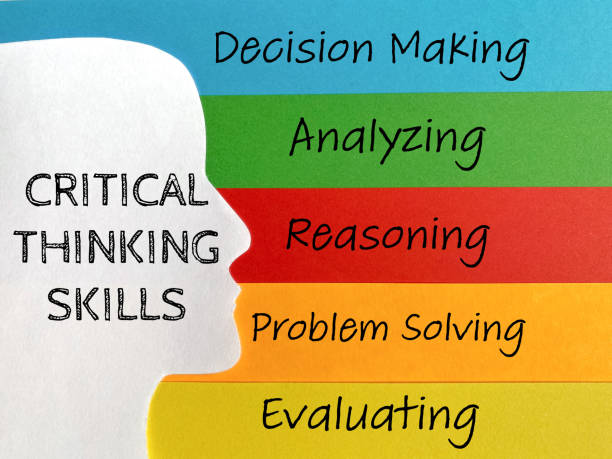
The Relationship Between Critical Thinking and Dissertation Writing

Introduction

The relationship between critical thinking and dissertation writing is one of the most important aspects of academic success. Dissertation writing is far more than collecting information and presenting arguments. It requires students to evaluate evidence, analyze theories, identify research gaps, and develop original perspectives. Critical thinking acts as the intellectual foundation that supports every stage of the dissertation process, from selecting a research topic to defending conclusions.

In higher education, universities increasingly expect students to demonstrate independent thinking and analytical depth in their dissertations. A well-written dissertation reflects not only subject knowledge but also the ability to question assumptions, interpret evidence carefully, and produce logical arguments. Without critical thinking, academic writing often becomes descriptive rather than analytical, which can weaken the overall quality of research.

As academic standards continue to evolve in 2026, students who develop strong critical thinking skills are more likely to produce dissertations that stand out for clarity, originality, and credibility. Understanding this relationship can help students improve both their research methods and their academic confidence.

Understanding Critical Thinking in Academic Research

Critical thinking refers to the ability to analyze information objectively, evaluate multiple viewpoints, and make reasoned judgments based on evidence. In academic research, this skill is essential because students must move beyond summarizing existing literature and instead contribute meaningful analysis to their field of study.

Dissertation writing demands a high level of intellectual engagement. Students are expected to compare theories, identify contradictions in previous studies, and assess the reliability of research sources. Critical thinking enables researchers to distinguish between strong and weak evidence while avoiding bias or unsupported assumptions.

For example, when reviewing scholarly articles, a critical thinker does not simply accept conclusions at face value. Instead, they examine research methodologies, sample sizes, limitations, and the broader academic context. This analytical process helps students create stronger arguments and more credible findings in their dissertations.

Universities and academic supervisors often emphasize critical thinking because it demonstrates intellectual maturity. A dissertation that reflects deep analysis and thoughtful interpretation is more likely to meet advanced academic standards and gain positive evaluation from examiners.

How Critical Thinking Shapes Dissertation Writing

The relationship between critical thinking and dissertation writing becomes especially clear during the research and writing process. Every dissertation stage requires students to think critically in order to produce coherent and academically rigorous work.

Choosing a Strong Research Topic

Critical thinking begins with topic selection. Students must identify a research area that is relevant, manageable, and capable of contributing new insight. This process involves evaluating current academic discussions, recognizing gaps in existing literature, and considering the practical significance of the research.

A poorly chosen topic often leads to weak arguments and limited analysis. By thinking critically at the beginning, students can develop focused research questions that support meaningful academic investigation.

Developing a Logical Research Framework

A dissertation must follow a clear structure supported by logical reasoning. Critical thinking helps students organize ideas effectively and connect arguments in a coherent way. Rather than presenting disconnected information, students learn to build a narrative that guides readers through the research process.

Strong dissertations typically include well-justified methodologies, carefully interpreted data, and balanced conclusions. These elements depend heavily on analytical thinking and intellectual consistency.

Evaluating Sources and Evidence

One of the most important aspects of dissertation writing is source evaluation. Academic databases contain thousands of articles, but not all sources offer equal value or reliability. Critical thinking allows students to assess credibility, relevance, and research quality before incorporating evidence into their work.

Reliable dissertations rely on peer-reviewed journals, authoritative publications, and evidence-based research. Students who critically evaluate sources are better equipped to avoid misinformation and maintain academic integrity throughout the writing process.

Students seeking additional academic guidance often benefit from professional support services such as UK Master’s dissertation help, which can provide structured assistance during complex research projects.

The Role of Analytical Writing in Dissertation Success

Dissertation writing requires analytical writing rather than simple description. Many students struggle because they focus too heavily on summarizing information instead of interpreting and evaluating it. Critical thinking bridges this gap by encouraging deeper engagement with academic material.

Analytical writing involves explaining why certain findings matter, how theories relate to each other, and what conclusions can reasonably be drawn from evidence. This process demonstrates academic expertise and strengthens the overall quality of the dissertation.

For instance, in a literature review, students should not merely describe previous studies. They should compare viewpoints, identify methodological weaknesses, and explain how existing research informs their own investigation. This level of analysis reflects higher-order thinking and contributes to stronger academic performance.

Critical thinking also improves argument development. Strong dissertations present balanced discussions that acknowledge alternative perspectives while defending a clear position. This approach demonstrates intellectual honesty and enhances the credibility of the research.

Common Challenges Students Face

Many students understand the importance of critical thinking but struggle to apply it consistently during dissertation writing. One common challenge is relying too heavily on descriptive writing. This often happens when students focus on collecting information rather than analyzing it.

Another difficulty involves confirmation bias. Some researchers unintentionally prioritize evidence that supports their assumptions while ignoring contradictory findings. Critical thinking helps students remain objective and open to multiple interpretations of data.

Time management can also affect analytical quality. Dissertation writing requires sustained concentration and thoughtful evaluation, which can be difficult under tight academic deadlines. Students who rush the process may produce weaker arguments and overlook important details.

Inexperience with academic research methods may create additional obstacles. Many postgraduate students are unfamiliar with advanced analytical techniques, making it harder to interpret data critically. Developing these skills takes practice, feedback, and engagement with scholarly research.

Practical Ways to Improve Critical Thinking Skills

Improving critical thinking requires active practice and intellectual curiosity. Students can strengthen these skills by engaging deeply with academic literature and questioning the assumptions behind published research.

Reading peer-reviewed journal articles critically is one effective strategy. Instead of focusing only on conclusions, students should examine research design, limitations, and evidence quality. This approach encourages deeper analytical understanding and improves academic writing skills over time.

Participating in academic discussions can also enhance critical thinking. Conversations with supervisors, classmates, and researchers expose students to diverse perspectives and encourage more balanced reasoning. Constructive feedback often reveals weaknesses in arguments that students may not notice independently.

Writing regularly is another important practice. Drafting analytical paragraphs, reflecting on research findings, and revising arguments help students refine their reasoning abilities. Strong dissertation writers continuously evaluate and improve their thought processes throughout the research journey.

Finally, students should remain open-minded and willing to challenge their own assumptions. Academic growth often occurs when researchers reconsider previously held beliefs in light of new evidence.

Why Critical Thinking Matters Beyond Academia

The benefits of critical thinking extend far beyond dissertation writing. Employers increasingly value analytical thinking, problem-solving, and evidence-based decision-making in professional environments. Students who develop these skills during higher education often carry them into successful careers.

Dissertation writing teaches students how to assess information carefully, communicate ideas clearly, and solve complex problems systematically. These abilities are valuable in fields such as business, healthcare, education, technology, and public policy.

Critical thinking also supports lifelong learning. In a rapidly changing digital world filled with information overload, the ability to evaluate sources and think independently has become more important than ever. Dissertation writing provides an opportunity to develop these transferable intellectual skills at an advanced level.

Conclusion

The relationship between critical thinking and dissertation writing is fundamental to academic achievement. Critical thinking allows students to analyze evidence, develop logical arguments, and produce original research that meets advanced scholarly standards. Without analytical thinking, dissertations risk becoming descriptive, unfocused, and academically weak.

Successful dissertation writing depends on the ability to question assumptions, evaluate sources critically, and interpret information thoughtfully. These skills not only improve academic performance but also prepare students for professional and intellectual success beyond university.

As higher education continues to emphasize research quality and independent thinking, students who cultivate strong critical thinking abilities will be better equipped to produce impactful dissertations and contribute meaningfully to their academic disciplines.

nagatop slot

nagatop

slot qris

nagatop

slot deposit

mahjong88

Shopping cart0
There are no products in the cart!
Continue shopping
0