

In today’s remarkably competitive employment landscape, documentation has evolved from a routine administrative task into a powerful professional asset. Among the many employment documents issued during an employee’s exit process, the relieving letter stands out as one of the most important. It serves not merely as proof of resignation acceptance but as a formal declaration of professional closure between an employer and an employee.
As businesses continue modernizing HR operations through digitized workflows and automated employee management systems, the demand for standardized relieving letter formats in Word and PDF has grown substantially. Companies now recognize that a professionally drafted relieving letter reflects organizational credibility just as strongly as onboarding documents reflect company culture.
What Is a Relieving Letter?
A relieving letter is an official document issued by an employer to confirm that an employee has formally resigned from their role and has been relieved of all responsibilities and duties within the organization. Typically issued on the employee’s final working day, the document verifies that all obligations, including notice periods and company formalities, have been completed successfully.
Unlike resignation letters, which are initiated by employees, relieving letters are employer-generated documents. They represent organizational approval and acknowledgement of the employee’s departure.
In a rapidly changing workforce where professionals frequently transition between companies, startups, and remote opportunities, this document has become remarkably essential for seamless career progression.
Why Is a Relieving Letter Important?
A relieving letter functions much like a professional passport. Without it, many organizations hesitate to proceed with onboarding formalities. Recruiters often use the document to validate employment authenticity and ensure that candidates exited previous roles ethically and professionally.
By presenting a clear relieving letter format, employers demonstrate transparency and procedural discipline. Employees, meanwhile, gain documented proof that they are no longer contractually bound to their previous organization.
In several industries, especially IT, finance, healthcare, and consulting, companies consider the relieving document mandatory before finalizing employment offers.
Key Elements Included in a Relieving Letter Format
A professionally written relieving letter format generally includes several essential components:
1. Employee Information
The document should clearly mention:
- Employee name
- Employee ID
- Designation
- Department
2. Employment Duration
The organization must specify:
- Joining date
- Last working day
3. Confirmation of Resignation Acceptance
This section confirms that the resignation was officially accepted by management or HR.
4. Clearance Confirmation
Companies usually mention that the employee has completed:
- Notice period obligations
- Asset submission
- Financial clearances
5. Appreciation Statement
Modern HR departments increasingly include positive acknowledgment statements that appreciate employee contributions.
6. Authorized Signature
The letter must contain:
- HR signature
- Company seal
- Official designation
Standard Relieving Letter Format
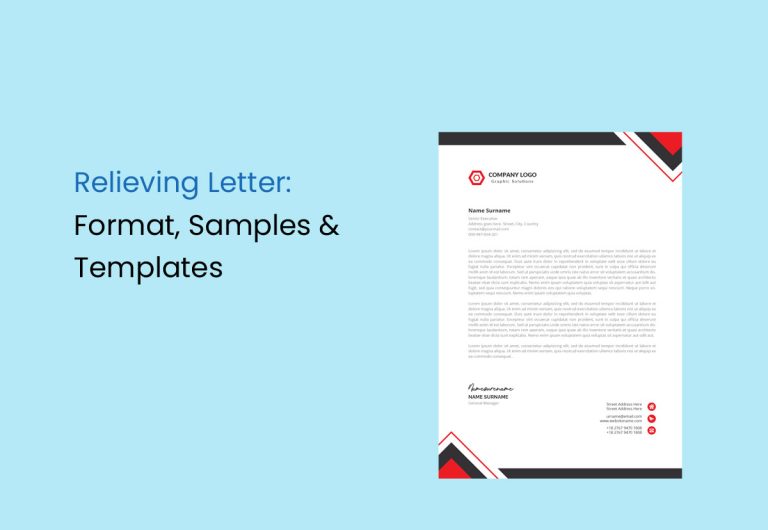
Below is a widely accepted professional structure used by organizations across industries.
Date: XX/XX/2026
To,
Employee Name
Employee Address
Subject: Relieving Letter
Dear [Employee Name],
This is to formally acknowledge that your resignation from the position of [Designation] at [Company Name] has been accepted. You are hereby relieved from your duties effective from [Last Working Day].
During your tenure with the organization from [Joining Date] to [Last Working Day], your contributions and dedication were appreciated by the company.
We confirm that you have completed all necessary formalities and handed over your responsibilities successfully.
We wish you continued success and growth in your future endeavors.
Sincerely,
[HR Name]
[Designation]
[Company Name]
Download Your Relieving Letter
Why Word and PDF Formats Matter
The growing preference for Word and PDF relieving letter formats reflects the practical needs of modern workplaces.
Word Format Advantages
- Easy editing and customization
- Suitable for HR drafting
- Ideal for template creation
- Convenient for internal revisions
PDF Format Advantages
- Secure and non-editable
- Professionally shareable
- Universally accessible
- Preferred for official documentation
By integrating cloud-based HR systems and automated documentation tools, many organizations now generate relieving letters simultaneously in both Word and PDF formats.
Rise of Digital HR Documentation
The transformation of HR departments has accelerated dramatically over the last decade. Traditional paperwork-heavy processes are increasingly being replaced by automated employee lifecycle management systems.
Today, advanced HR platforms generate:
- Appointment letters
- Experience certificates
- Salary slips
- Relieving letters
within seconds.
This shift has significantly reduced administrative delays while improving document consistency and compliance standards. Businesses adopting AI-driven HR automation are also minimizing human errors that previously caused employment verification disputes.
Common Mistakes in Relieving Letters
Despite its importance, many organizations still issue incomplete or poorly formatted relieving letters. Some of the most common mistakes include:
Missing Dates
Incorrect joining or relieving dates can create verification complications during future hiring.
Informal Language
Overly casual wording weakens the professionalism of the document.
Lack of Authorization
Unsigned documents often become invalid during employment verification.
Negative Statements
A relieving letter should remain factual and professional rather than emotionally reactive.
How Employees Can Request a Relieving Letter
Professionals leaving an organization should ideally request the document during exit formalities. A polite follow-up email to HR generally accelerates the process.
Employees should verify:
- Name spelling
- Employment dates
- Designation details
- Official signatures
before accepting the final copy.
Industry Trends Shaping Relieving Documentation
The future of HR documentation appears increasingly digital, secure, and integrated. Companies are adopting blockchain-backed employment records, electronic signatures, and cloud verification systems to streamline workforce mobility.
Remote work culture has further emphasized the need for instantly shareable PDF-based employment records. Meanwhile, startups are leveraging HR technology platforms to automate document generation at scale.
Experts believe that digitally verified relieving letter systems may soon become standard practice globally.
Final Thoughts
A relieving letter is far more than a routine exit document. It symbolizes professional closure, organizational transparency, and career continuity. In an employment market shaped by speed, credibility, and digital verification, a well-crafted relieving letter format in Word and PDF has become indispensable.
For employers, issuing a polished relieving document strengthens brand reputation and employee trust. For professionals, it acts as a bridge toward future opportunities.
As workplaces continue evolving through automation and digital transformation, the humble relieving letter is quietly becoming one of the most strategically important documents in the modern employment ecosystem.
